
'%20id='ico-down'%20stroke='%23000000'%20stroke-width='1.5'%3e%3cg%20transform='translate(1092.250000,%20254.750000)'%3e%3cpolyline%20id='Path-2-Copy-4'%20transform='translate(5.500000,%202.750000)%20scale(1,%20-1)%20rotate(-180.000000)%20translate(-5.500000,%20-2.750000)%20'%20points='0%200%205.5%205.5%2011%200'%3e%3c/polyline%3e%3c/g%3e%3c/g%3e%3c/g%3e%3c/svg%3e)


Moving
Visas & Immigration
How to immigrate to Germany: visas in 2026
Do you need a visa to move to Germany, and how do you get one? Find out about the different types of German visas and immigration requirements.

Whether you need a visa for Germany depends on your nationality and your reason for traveling to the country. Make sure you check the requirements well before departure to avoid any problems at the border.
This article outlines the different types of visas available for visiting, living, and working in Germany. Explore each option below and learn which one best fits your needs:
Use Wise for moving money abroad
Wise offers expatriate-friendly financial services including international money transfers at mid-market exchange rates with transparent, low fees, helping you save money when sending funds to family or managing finances across borders. Their multi-currency account allows you to hold, convert, and spend money in multiple currencies.

Overview of German immigration and visas
As the most populous and economically powerful nation in the EU, Germany attracts many people each year who visit, live temporarily, or settle. In fact, German authorities approved 586,144 first-time visa applications in 2023, behind only Poland (642,789).
Just over 16% of the German population (13.9 million) is foreign-born. Around 21 million people in the country have a migrant background.
The Federal Office for Migration and Refugees (Bundesamt für Migration und Flüchtlinge – BAMF) is the government agency responsible for issuing visas and integrating new arrivals in Germany.
Like many EU/EFTA countries, Germany operates a two-tier immigration system. EU/EFTA citizens can travel and live in Germany without visa or permit restrictions. Germany is also part of the Schengen Area, meaning it has no border controls for nationals from 25 other European countries.
Who needs a visa or residence permit for Germany?
Anyone from outside the EU/EFTA needs a visa to enter Germany if they stay longer than three months. Certain countries have agreements with Germany that allow their citizens to stay for up to 90 days without a visa. However, they will need a visa or residence permit to stay longer than this.
If you are from a country that doesn’t have a visa agreement with Germany, you will need to apply for a visa to enter, and you will need a German residence permit if your stay is longer than three months.
The EU also plans to introduce the European Travel Information and Authorization System (ETIAS) by 2025. This electronic visa waiver system will be a requirement for anyone from these 62 countries staying in the Schengen Area for less than three months.
Certain family members of EU/EFTA nationals can travel and stay in Germany without a visa.
Different rules apply to ethnic German resettlers descended from German nationals living in Eastern Europe and the former Soviet Union, who can automatically obtain German citizenship. Special rules also apply to Jewish migrants coming to Germany.
UK nationals in Germany since Brexit
Following Britain’s withdrawal from the EU, UK nationals are subject to immigration controls in Germany and other member states. The UK is one of the 62 nations whose citizens can travel visa-free to Germany for up to 90 days.
However, UK nationals are not allowed to take up employment or any economic activity in Germany during this period. Additionally, family members accompanying UK nationals need a visa if they are not from a country with a visa agreement in place.

Those from the UK wanting to stay in Germany for more than 90 days will need a relevant German visa or residence permit relating to their stay. You can find out more about the rights of UK nationals living in Germany on the German Ministry of the Interior website and the UK government website.
Different types of German visas
There are essentially two types of German visas:
- Short-stay visas, including Schengen type C visas, which are valid for stays of up to 90 days in any 180-day period, and airport transit visas (Flughafentransitvisum)
- Long-stay visas, also known as type D National visas, are for stays of over 90 days.
Depending on your reason for travel, your visa may allow for single or multiple entries.
German residence permits
Non-EU/EFTA citizens staying in Germany for longer than three months require a residence permit. This authorizes you to stay for longer. To apply for your residence title, contact your local BAMF branch office.
The following types of permits are available:
- Temporary Residence Permit: for work, study, family reunification, and other limited-duration stays. These are usually valid for up to five years, linked to the purpose of stay, and renewable.
- EU Blue Card: this document is for highly skilled professionals. It allows them to stay for four years and work in other EU/EFTA countries.
- Permanent Residence Permit (Niederlassungserlaubnis): allows residents to settle in Germany permanently. You can read more about this in the section below on Permanent residence and citizenship or in our dedicated article.
Short-term visas for Germany
Short-stay visas allow you to visit Germany for no more than 90 days within a period of 180 days. You must have a reasonable purpose for entering Germany, enough money to fund your visit and departure, and health insurance coverage for the entire stay.
Do I need an airport transit visa for Germany?
Nationals of some countries require an airport transit visa (Category A visa) when changing flights at a German airport. The Foreign Office provides a list of nationalities that the airport transit visa applies to.

Your airport transit visa allows you to enter the international transit zone at a German airport. However, if you hold a valid Schengen visa, residence permit, or certain other visas, you may not need a transit visa. Check with the German embassy or consulate in your home country for specific requirements before traveling.
Short-stay Schengen visa (Category C)
A short-stay Schengen visa (also known as a type C visa) allows you to stay in the Schengen area, including Germany, for up to 90 days within a 180-day period.
Schengen visa categories
There are several types of Schengen visas available. Depending on the purpose of your visit, you may apply for the following:
| Name of visa | Purpose | Requirements for German visa |
| Tourist visa | Vacations Visits to family or friends | Proof of relationship if staying with relatives Letter from a tour organizer if part of an official tour |
| Business visa | Business meetings Events Conferences Other work/self-employed purposes | Letter of invitation from your host organization or a letter of permission from your employer in your home country |
| Offical visits | Meetings Consultations Negotiations Events held by intergovernmental organizations | Letter of invitation from the host organization Note from consular department if traveling on official diplomatic business |
| Medical visa | Treatment in a German hospital or specialist center | Letter from a doctor or medical specialist confirming that you need treatment abroad Confirmation from the institution in Germany agreeing to provide treatment Proof of upfront payment or that health insurance covers the care |
| Cultural and sports events or film crews | Cultural events Sports Official filming Religious activities | Event information such as an official program or tickets Invitation letter For filming events: information about the film, list of crew members, letter from filmmakers and proof of qualification and authorization for the film crew |
| Trade fair and exhibitions visa | Events relating to work or leisure | Letter of invitation or proof of ticket purchase Business license details of the organizers |
| Training/internship visa | For students staying short term | Confirmation of acceptance onto a course or into the internship A work permit from the local employment agency if the placement involves paid work |
German short-stay visa application
You can apply for a short-stay German visa at a German embassy or consulate in your home country or another Schengen country. It’s also possible to apply at a visa application center.
You will need to provide the following:
- Completed visa application along with accompanying declaration form
- Two passport photos
- Valid passport or travel ID
- Details of your return flight
- Accommodation details for your stay
- Proof of health insurance
- Proof of sufficient funding to cover your trip, currently amounting to at least €45 a day
- Information confirming the purpose of your trip
- Any relevant documentation relating to the purpose of your trip
As part of the application process, you will need to attend a short interview at the embassy, consulate, or application center. The visa costs:
- €90 for over-12s
- €45 for children aged 6–12
- Free of charge for children under six
Short-stay Schengen visas typically take around 45 days to process. You can usually only extend or exchange this visa in exceptional circumstances.
Long-term visas to live in Germany
Long-stay German visas, or type D national visas, are for stays of over three months. Nationals who require a visa to enter Germany should apply for this and their residence permit before arriving.
There are three main purposes for long-stay visas in Germany: work, study, and family reunion.
Work visas for Germany
There are several different work-related visas for long-term work in Germany. These are:
- Skilled workers with vocational qualifications – for workers qualified in vocational fields, for example, construction, hospitality, or plumbing
- Graduate workers – for those qualified to at least degree level
- Skilled workers without training or qualifications – for IT specialists with at least three years’ experience
- Scientists – for researchers and PhD students
- Intra-corporate transfer (ICT) employees – for managers, specialists, and trainees
- Self-employment and freelancing – to start your own business if you can show proof of funding and demonstrate your idea will benefit the German economy; or for freelancers with a necessary license to practice one of the liberal professions
- Au pairs – 12-month visa for au pairs aged under 27
- Internships – for students wanting to carry out professional work experience
- Working holidays – for nationals of certain countries aged 18-30 to take part in a program lasting up to 12 months
- Volunteering – to take part in European Voluntary Service (EVS) activities
- Visas for nationals of specific countries – citizens of 16 countries can get a residence permit without any qualifications if they have a job offer in Germany
Unless otherwise stated, these visas typically last for as long as your job contract, up to five years. After this, you can usually apply for a permanent German residence permit.
Graduates and skilled workers with vocational qualifications can get a work visa to look for a job for up to six months. Everyone else needs a job offer to get a German visa for work purposes.
Learn how to apply for a German work visa in our dedicated article.
Do I need a visa to study in Germany?
Non-EU students need a student visa to study in Germany. They can apply for this visa after being accepted to a German educational institution.
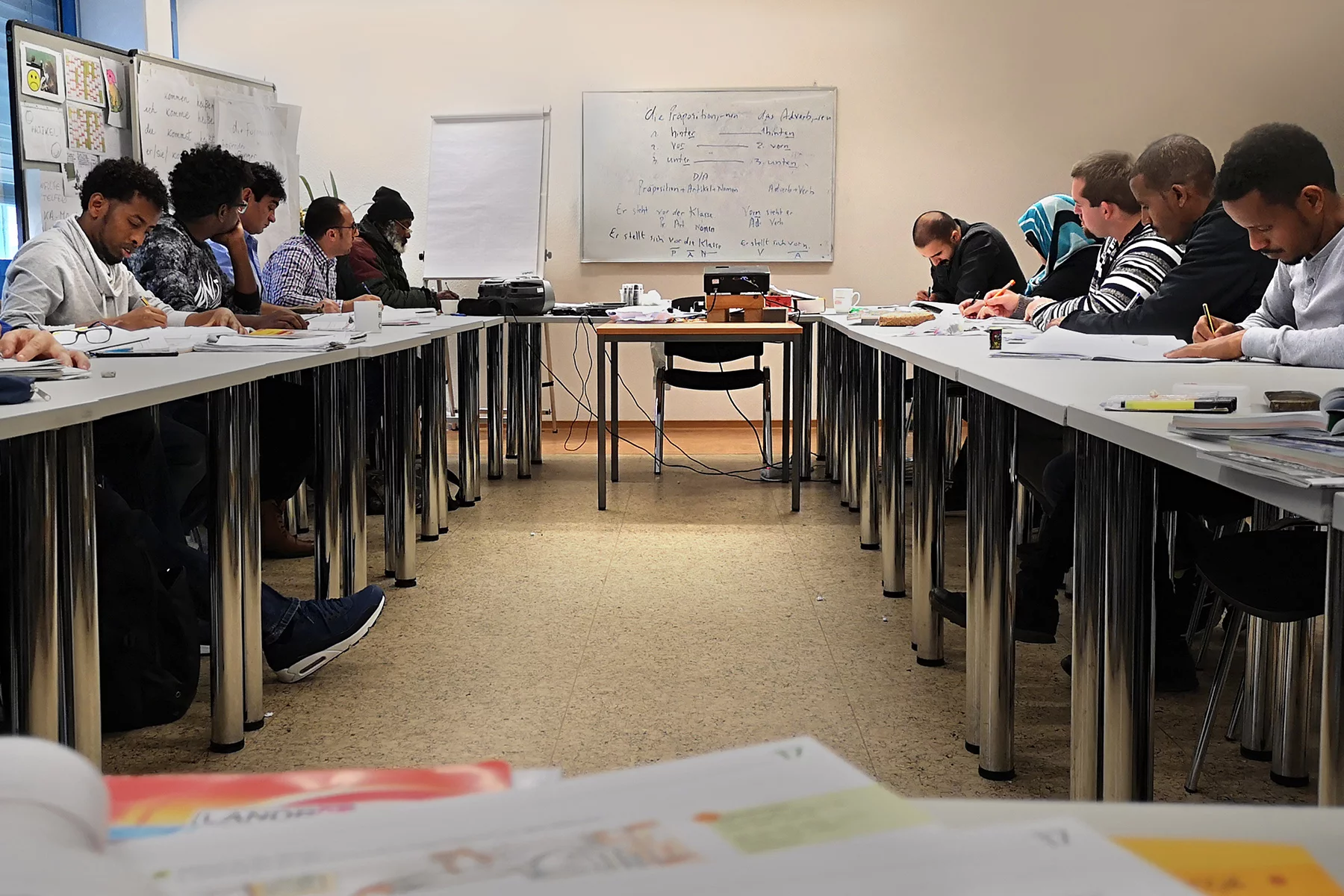
Germany offers the following long-stay study visas:
- Student visa – for full-time higher education learning at a college or university
- School visas – for school exchanges, language courses, or attending an German international school for an extended period
- Vocational training visa – for either school-based or in-company dual training at a German technical college, vocational college, or vocational school
- Language course visa – for German language courses lasting up to 12 months
To find out how to apply, read our guide to student visas for Germany.
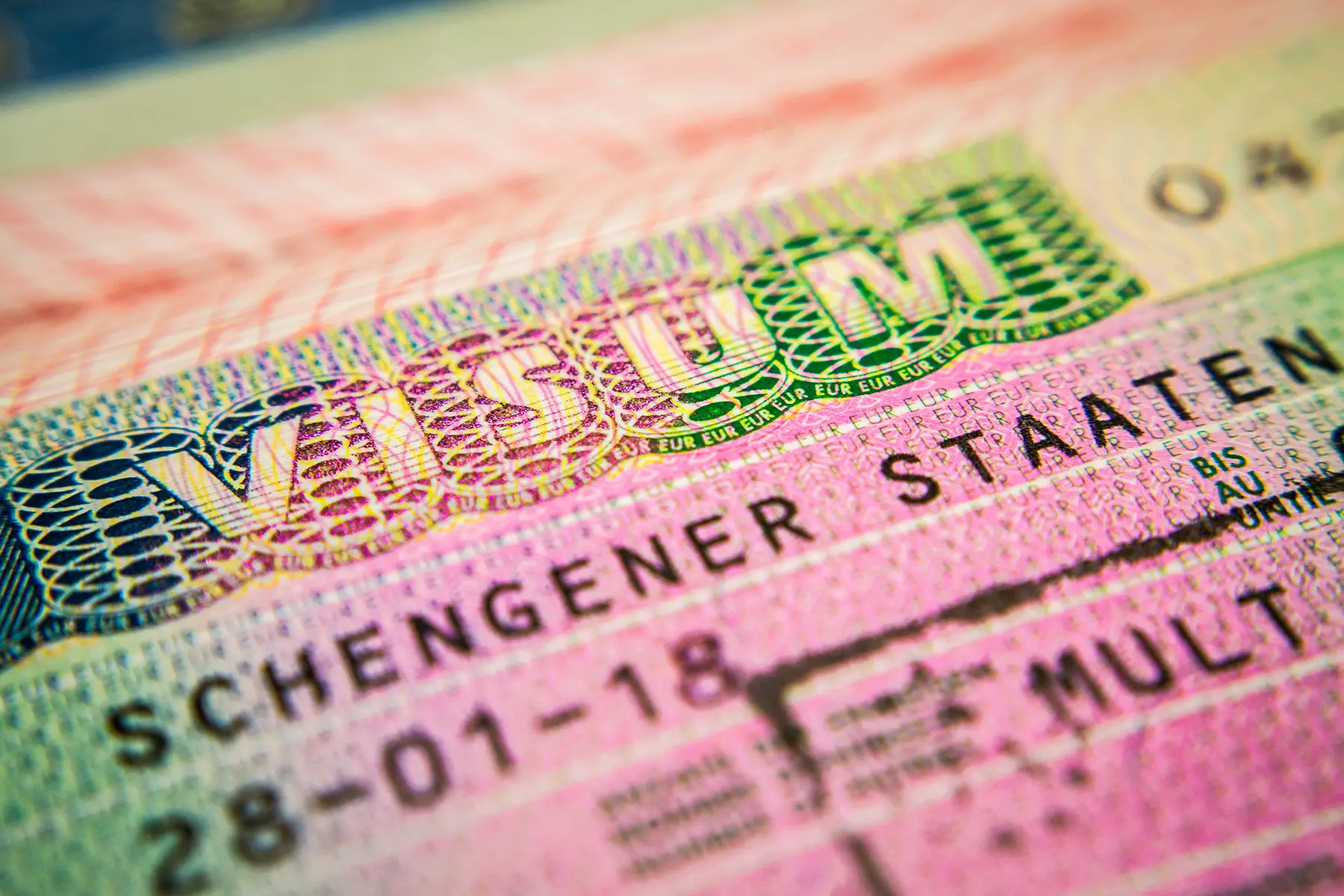
German spouse and family reunification visas
Spouses/partners and dependent children under 18 (older if they meet certain conditions) can apply for a German family reunion visa. The following relatives can also apply:
- Family members of German nationals – parents or dependent children aged under 18, plus other dependent relatives in certain circumstances
- Relatives of EU/EFTA nationals – children aged under 18-21 (if EU family member is employed), plus grandchildren, parents, and grandparents if they are dependants
- Family members of third-country nationals – other dependent relatives in certain circumstances
Family members joining on a reunion visa can seek work in Germany. However, anyone traveling as a dependant must prove the relative they are joining has enough money to support them. They must also live in the same household as a family unit.
Get more details on family reunion visas in our detailed guide.

General information for long-stay German visa applications
The application process for long-stay German visas is largely the same as for short-stay visas if you apply in your home country before entering Germany. However, if you apply once you are inside Germany, you will need to visit your local immigration office (Ausländerbehörde).
Requirements for German long-stay visas
In addition to the standard documentation, you will typically need to provide:
- Proof of the reason for your stay, for example, a job contract, confirmation of study placement, or marriage certificate.
- Evidence of necessary qualifications needed for your job or study placement, along with German recognition of any foreign qualifications or certificates.
- Proof that you can understand German at a level that corresponds to your job or study. If you are an adult applying on a family visa, you must demonstrate a basic level of German.

Long-stay visas generally cost €75, or €37.50 for children. Your spouse and any dependent children under 18 can apply at the same time, but they will need their own visa application. Alternatively, they can apply for a family reunion visa later.
Asylum seekers and refugees in Germany
With around 2.5 million refugees, Germany hosts more displaced people than anywhere else in Europe. In addition, there were 148,200 first-time asylum applications in Germany in 2021, accounting for 31% of the EU total.
Asylum seekers in Germany are distributed across the federal states through a quota system. Some are housed in reception and accommodation centers, while others get private accommodation. Asylum seekers receive up to €410 per person per month, depending on their family status and accommodation. They can work without restriction in Germany after three months.
Applying for asylum in Germany
You can apply for asylum in Germany through the BAMF. You can do this in several places, including:
- Border control
- Any police station
- Local immigration office
- Any asylum center, for example, a local arrival, decision, and return (AnkER) facility
To make an application, you should provide your ID if possible. Documentation detailing your reasons for seeking asylum is encouraged, such as court orders, arrest warrants, threatening letters, or witness statements. You should also provide other information that may support your application, for example, medical letters.
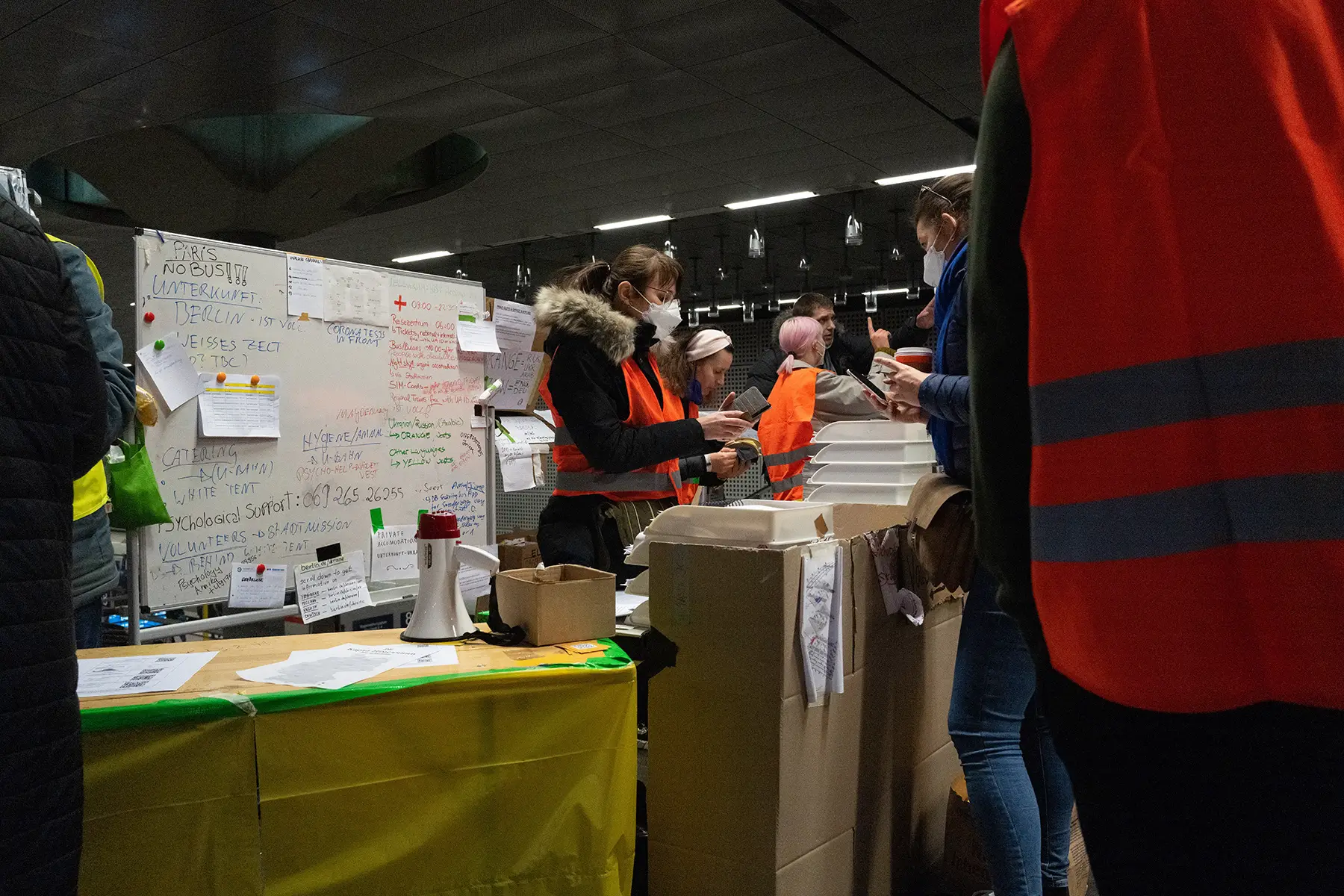
The BAMF will process your application and send you a temporary residence permit. The process can take a few months, during which the authorities will interview you and check your case.
Decisions on asylum applications in Germany
After reviewing your application, the BAMF issues one of the following decisions:
- Granting of full refugee status in Germany
- Acknowledgment of entitlement to asylum
- Offer of subsidiary protection
- National ban on deportation
- Rejection of application
You will receive a residence permit valid for three years if you have refugee protection or one year if you have subsidiary protection or are granted a deportation ban.
If your application is rejected, you will have 30 days to leave Germany (or one week if your application is rejected as ‘manifestly unfounded’). You can appeal the decision through the German administrative courts. If this is not successful, you can take your appeal to one of the following:
- European Court of Justice (ECJ)
- Federal Constitutional Court of Germany (BVerfG)
- European Court of Human Rights (ECHR)
The BAMF provides an information brochure (available in multiple languages) for more information on the asylum procedure in Germany. You can also read the German Asylum Act for legal information.
Permanent residence and citizenship in Germany
Thinking of staying forever in Germany? You can apply for a permanent residence permit after five years of living in the country. However, there are some exceptions – skilled workers who graduated from a German university can apply after two years, and EU Blue Card holders can apply after 33 months.
Once you have lived in Germany for eight years (in most cases), you can apply for full German citizenship and get a German passport if you meet the eligibility criteria.

Arriving in Germany
All new arrivals in Germany must register with their local residents’ registration office (Einwohnermeldeamt) if staying for longer than three months. You should do this within two weeks of arriving. Registration is required for tax and social security purposes.
Other things you may want to consider during the first days of arriving are:
- Registering for healthcare in Germany
- Opening a German bank account
- Sorting out your utilities and telecommunications
- Getting a German SIM card

If you want to learn more about German culture and society or fit in with the locals, you can enroll in one of the many integration courses.
Transfer Funds to Germany for Your Visa Application
When applying for a German visa, you’ll need to demonstrate sufficient funding and may need to transfer money from abroad to support your application or initial settlement. Wise offers a straightforward way to send money internationally using the mid-market exchange rate with transparent, low fees. This can help you manage the financial requirements for your German visa more efficiently while avoiding high bank transfer costs.
Learn more about Wise.
Appeals and complaints
If your visa application has been turned down, you can appeal the decision with the German embassy or consulate within one month of receiving the verdict.
If you are unhappy with the outcome of your appeal, you can take it to the administrative courts in Germany within one month of receiving the decision.
Useful resources
- Federal Office for Migration and Refugees (Bundesamt für Migration und Flüchtlinge – BAMF) – German government body responsible for immigration, visas, and permits
- Federal Foreign Office (Auswärtiges Amt) – government information about visas


Did you find this guide helpful?