'%20id='ico-down'%20stroke='%23000000'%20stroke-width='1.5'%3e%3cg%20transform='translate(1092.250000,%20254.750000)'%3e%3cpolyline%20id='Path-2-Copy-4'%20transform='translate(5.500000,%202.750000)%20scale(1,%20-1)%20rotate(-180.000000)%20translate(-5.500000,%20-2.750000)%20'%20points='0%200%205.5%205.5%2011%200'%3e%3c/polyline%3e%3c/g%3e%3c/g%3e%3c/g%3e%3c/svg%3e)



'%20fill='%23000000'%3e%3cg%20id='icons'%20transform='translate(56.000000,%20160.000000)'%3e%3cpath%20d='M144,7339%20L140,7339%20L140,7332.001%20C140,7330.081%20139.153,7329.01%20137.634,7329.01%20C135.981,7329.01%20135,7330.126%20135,7332.001%20L135,7339%20L131,7339%20L131,7326%20L135,7326%20L135,7327.462%20C135,7327.462%20136.255,7325.26%20139.083,7325.26%20C141.912,7325.26%20144,7326.986%20144,7330.558%20L144,7339%20L144,7339%20Z%20M126.442,7323.921%20C125.093,7323.921%20124,7322.819%20124,7321.46%20C124,7320.102%20125.093,7319%20126.442,7319%20C127.79,7319%20128.883,7320.102%20128.883,7321.46%20C128.884,7322.819%20127.79,7323.921%20126.442,7323.921%20L126.442,7323.921%20Z%20M124,7339%20L129,7339%20L129,7326%20L124,7326%20L124,7339%20Z'%20id='linkedin-[%23161]'%3e%3c/path%3e%3c/g%3e%3c/g%3e%3c/g%3e%3c/svg%3e)
'%20fill='%23000000'%3e%3cg%20id='icons'%20transform='translate(56.000000,%20160.000000)'%3e%3cpath%20d='M335.821282,7259%20L335.821282,7250%20L338.553693,7250%20L339,7246%20L335.821282,7246%20L335.821282,7244.052%20C335.821282,7243.022%20335.847593,7242%20337.286884,7242%20L338.744689,7242%20L338.744689,7239.14%20C338.744689,7239.097%20337.492497,7239%20336.225687,7239%20C333.580004,7239%20331.923407,7240.657%20331.923407,7243.7%20L331.923407,7246%20L329,7246%20L329,7250%20L331.923407,7250%20L331.923407,7259%20L335.821282,7259%20Z'%20id='facebook-[%23176]'%3e%3c/path%3e%3c/g%3e%3c/g%3e%3c/g%3e%3c/svg%3e)

Starting your career as an expat in Spain can be an exciting new chapter, with a range of opportunities in sectors like tourism, tech, and education. To land the right role, it’s essential to understand the local job market, know where to look, and tap into the right networks.
Take the next step toward finding a job in Spain with these topics:
Resume.io
Trying to land the job that will take you on your next big adventure? Make sure your application is top of the pile with Resume.io’s online resume builder. They provide resume templates, cover letter help, and more, making job applications effortless. Make it to the next round with Resume.io.

The job market in Spain
Spain’s job market has seen significant shifts over the past few years, setting it apart from other European countries. While Spain offers diverse opportunities in sectors such as tourism, technology, renewable energy, and agriculture, the country also faces challenges, particularly around high unemployment rates and regional disparities in job opportunities.

In any given year, Spain’s unemployment rate is typically the highest in the EU and Eurozone. As of October 2024, the unemployment rate was 11.2%, almost twice the EU average of 5.9%. The highest levels of unemployment are among people with limited formal education, experience, or training.
Spain also has a staggeringly high unemployment rate among people under 25, with almost a quarter of young people jobless in August 2024. The Spanish government has implemented a specific plan to try and address the country’s youth unemployment issue.
The reason for Spain’s high unemployment rate is not precisely understood, but it stems primarily from structural issues. This may include a mismatch between skills offered versus those in demand in Spain, which generally does not apply to foreigners or expat workers seeking a job there.
What jobs are in demand in Spain?
Spain’s main industries include:
- Hospitality
- Wholesale and retail trade
- Manufacturing
- Administration
- Health and social services
- Transportation
- Construction
- Art, entertainment, and recreation
Skills shortages have been reported in a number of sectors, including:
- Software development and technology (especially AI, cybersecurity, and data science)
- Healthcare
- Renewable energy and engineering
- Manufacturing and construction
- Tourism and hospitality (especially cooks and bilingual customer service representatives)
- Agriculture and farming
- Education (especially STEM and English language teachers)
The biggest Spanish companies are:
- Inditex (fashion retailer)
- Mercadona (supermarket)
- El Corte Inglés (department store)
- Grupo Santander (bank)
- Telefónica (telecoms)
- BBVA (bank)
- Grupo ACS (construction)
- Ferrovial (transportation infrastructure)
In addition to these, multinational companies with a strong presence in Spain include Amazon, Deloitte, Ford Motor Company, and IBM.
Job vacancies for foreigners in Spain
Spain is a desirable destination for expats, both for its lifestyle and work opportunities, especially as the job market continues to adapt to international talent.

Foreign workers have become an increasingly significant part of Spain’s workforce, comprising around 16% of all employed people in Spain. The technology, tourism, and agriculture sectors mainly rely on foreign labor. Major cities like Madrid, Barcelona, and Valencia are tech and finance hubs, making them particularly attractive to highly skilled expats.
In terms of incentives for foreigners, Spain offers an EU Blue Card for highly skilled workers, making it easier for professionals to live and work in the country. While there isn’t a tax incentive exactly like the Netherlands’ 30% ruling, Spain has Beckham Law (yes, after that Beckham). It offers a reduced tax rate for non-resident individuals working in Spain, which is particularly attractive for high-income professionals.
Spain offers a wealth of job opportunities for foreign workers, particularly in sectors that value multilingualism or specific skill sets. The tourism and hospitality industries, for instance, are in high demand for foreign language speakers, especially in popular tourist areas like Costa del Sol and the Balearic Islands.
The tech industry actively seeks expats, especially for roles in software development, data science, and cybersecurity, as Spanish companies and international firms based in Spain expand their digital services. Language skills, particularly in customer service and call center positions, are highly valued, providing ample opportunities for foreign workers to serve international markets.

Sectors like agriculture and tourism, which rely on seasonal work and typically have a lot of foreign workers, often offer short-term or temporary contracts. This can make job stability less sure in the long run.
On the other hand, professionals in tech and finance often enjoy conditions similar to those of their Spanish counterparts. However, data on salary discrepancies suggests that median wages for foreign workers can be somewhat lower.
Jobs in Spain for Americans
If you’re an American looking for a job in Spain, explore international job platforms like LinkedIn, Glassdoor, or local sites like InfoJobs and Indeed Spain. Major cities like Madrid, Barcelona, and Valencia will have vacancies for English-speaking professionals, especially with multinational companies and startups.
Spain’s job market offers opportunities in education, tourism, and technology, with teaching English being one of the most popular career paths for Americans. Proficiency in Spanish is not always required but it can really expand your prospects, opening you up to marketing, customer service, or hospitality roles.
Teaching English through programs like the North American Language and Culture Assistants Program (NALCAP) or private tutoring is a common entry point for Americans. See the section below or the ESL Base page on TEFL courses in Spain for more information on teaching English in the country.
How to find jobs in Spain
Expatica jobs in Spain
You can find suitable openings on the Expatica jobs board, which has a constantly updated list of jobs across Spain.
EURES
If you’re from the EU/EFTA, be sure to check out EURES, the European Job Mobility Portal, which the European Commission maintains. You can also upload your resume and get advice on looking for work in Spain.

Public job sites
Servicio Público de Empleo Estatal (SEPE), Spain’s national employment service, offers job listings and resources for Spanish and EU citizens, including options for those seeking training or specialized employment programs. They also provide information on job vacancies in Spain. In their job portal, Empléate, you can register your resume and access thousands of job listings nationwide.
Job websites in Spain
There are also various general job websites, including the following:
Jobs for English speakers
If you’re an English speaker looking for a job in Spain, there are a few news sites that regularly post vacancies. These include The Local and ThinkSpain, both of which list jobs that require English skills and are perfect for expats.
Recruitment agencies
As a starting point, look in the list of placement agencies maintained by Spain’s Sistema Nacional de Empleo. You can also check out Expatica’s recruitment agency listings in our directory.
Foreign language teaching
To teach English in a school in Spain, you’ll generally need to have a Bachelors degree and a TEFL (Teaching English as a Second or Foreign Language) certification. Most teaching contracts begin in September and end in June. Some teachers also choose to teach at English language camps in the summer or offer private lessons.
The main cities for English teaching jobs are Madrid, Barcelona, Valencia, and Seville. Spain has over 400 ESL schools across the country.

You can also look for jobs with the British Council, and on TEFL-associated websites such as:
Embassies and foreign organizations
Check out opportunities at the embassies and consulates in Madrid and Barcelona. Keep in mind that most will expect a high standard of both spoken and written Spanish.
The British Embassy in Madrid advertises jobs from time to time. As well as working on foreign policy issues, the embassy offers various services for British nationals in Madrid, including assistance with emergency travel documentation.
Make the first move: speculative applications
There’s no harm in sending out some speculative applications to companies you’d particularly like to work for. Just make sure you address your cover letter to the right person. You can search the company’s website for contacts, or consult Kompass Spain’s database of company details.
Self-employment and freelancing in Spain
Another option is to set out on your own and either work as a freelancer in Spain or start up a Spanish business. You can do this as long as you have the right to work in Spain. (i.e., all EU/EFTA citizens and third-country nationals with the relevant visa.)

If you go down this route in Spain, you have a choice between working as a freelance professional/sole trader (autónomo) where your personal and business income are taxed together, or setting up a limited company (sociedad limitada) where the business exists separately.
Traineeships, internships, and volunteering in Spain
University graduates can find EU-based traineeships via the European Commission Traineeships Office (Bureau de Stages). Otherwise, you can search for internships and placements on AIESEC (for students and recent graduates in the UK) or IAESTE (for students in science, engineering, and applied arts). Internships can also be found at Globalplacement and Intern Abroad.

For those 17 to 30, you can find volunteer programs at the European Voluntary Service (EVS), where you work abroad for up to 12 months in exchange for board, food, insurance, and a small allowance. For holiday volunteering opportunities, check Workaway.
How do you apply for a job in Spain?
Once you’ve found a job you’re interested in, it’s time to start the application process. It’s important to adapt your resume and cover letter to the Spanish job market, and learn about the country’s interview etiquette so that things go as smoothly as possible.
Sometimes you can just send in your CV and cover letter as is, but other jobs will require you to fill in an application form and write a personal statement. Don’t worry – the content and tone of what you need to write is largely the same. Unless you are applying for an English-speaking position or the job posting states otherwise, your application materials should be in Spanish.
It can help to streamline the CV-writing process by using an online platform such as Resume.io.

Job interviews in Spain are pretty standard and similar to many other countries. Expect the interview to last around 30–60 minutes, dress in business attire, and research the company beforehand so that you’re prepared to ask good questions. Some interviews may be accompanied by short tests or tasks to measure skills and aptitude.
What are the requirements to find work in Spain?
1. Do you need a Spanish work visa?
Whether or not you need a visa to work in Spain depends on which country you’re originally from.
If you’re from the EU or European Free Trade Association (EFTA) and looking for a job in Spain, you don’t need an official permit to work there. Non-EU/EEA citizens, also called third-country nationals, need a work permit and a signed employment contract before they can apply for one. UK citizens who want to work in Spain post-Brexit also need a work visa.

There are a few different types of Spanish work visas, including:
- Employee visas – for those who have a work contract with a Spanish employer; length of validity depends on the length of the employment contract
- Self-employed work visas – for people who are self-employed and already hold a self-employed work permit and residence permit
- Entrepreneur visas – for anyone who plans to start a business in Spain that is of interest to the Spanish economy or job market
- Visa for highly qualified workers and intra-company transfers – for those who meet specific educational and experience requirements or are being transferred to an office in Spain

2. Do you need to speak Spanish to work in Spain?
Whether you need to speak Spanish to work in Spain depends on your career path and specialization. Most multinational corporations hire professionals without Spanish skills. Local jobs are harder to come by, but some of the best jobs for English speakers in Spain include tourism, real estate, teaching at an international or language school, and services that cater to expats.
For other types of employment, you will generally need to speak Spanish. But the good news is there are numerous language schools in Spain where you can brush up your skills.
3. Can you transfer your qualifications to work in Spain?
If you plan to work for the Spanish government or in a field requiring certification or academic credentials, you will need your relevant qualifications transferred to Spain. You can find out whether your profession is regulated in Spain by checking the European Commission’s database.
Spain is part of the Bologna Process, which means it falls under the European Higher Education Area, which means that higher education qualifications from other member countries are valid there.
If your country is not signed up for the Bologna Process, you can find information about getting qualifications recognized from abroad on the NARIC website.

You’ll also need to get any professional references translated into Spanish; don’t forget to bring them with you when you move. Consider getting a Europass, which puts your personal details, qualifications, and skills into a standard format.
4. You will need an NIE and social security number
Before you can start working in Spain, you will need to apply for your NIE (Número de Identidad de Extranjero) from an immigration office or embassy in Spain. The NIE is a tax number for foreign residents and is needed to carry out most official or legal activities in Spain.
Once you have your NIE, you can apply for your Spanish social security number which is used for all of your dealings with the social security system in Spain.
Financial support while looking for a job in Spain
SEPE manages financial support and other resources for unemployed people living in Spain. You can claim unemployment benefits while looking for a job as long as you have worked at least 360 days in the last six years and are registered for social security.
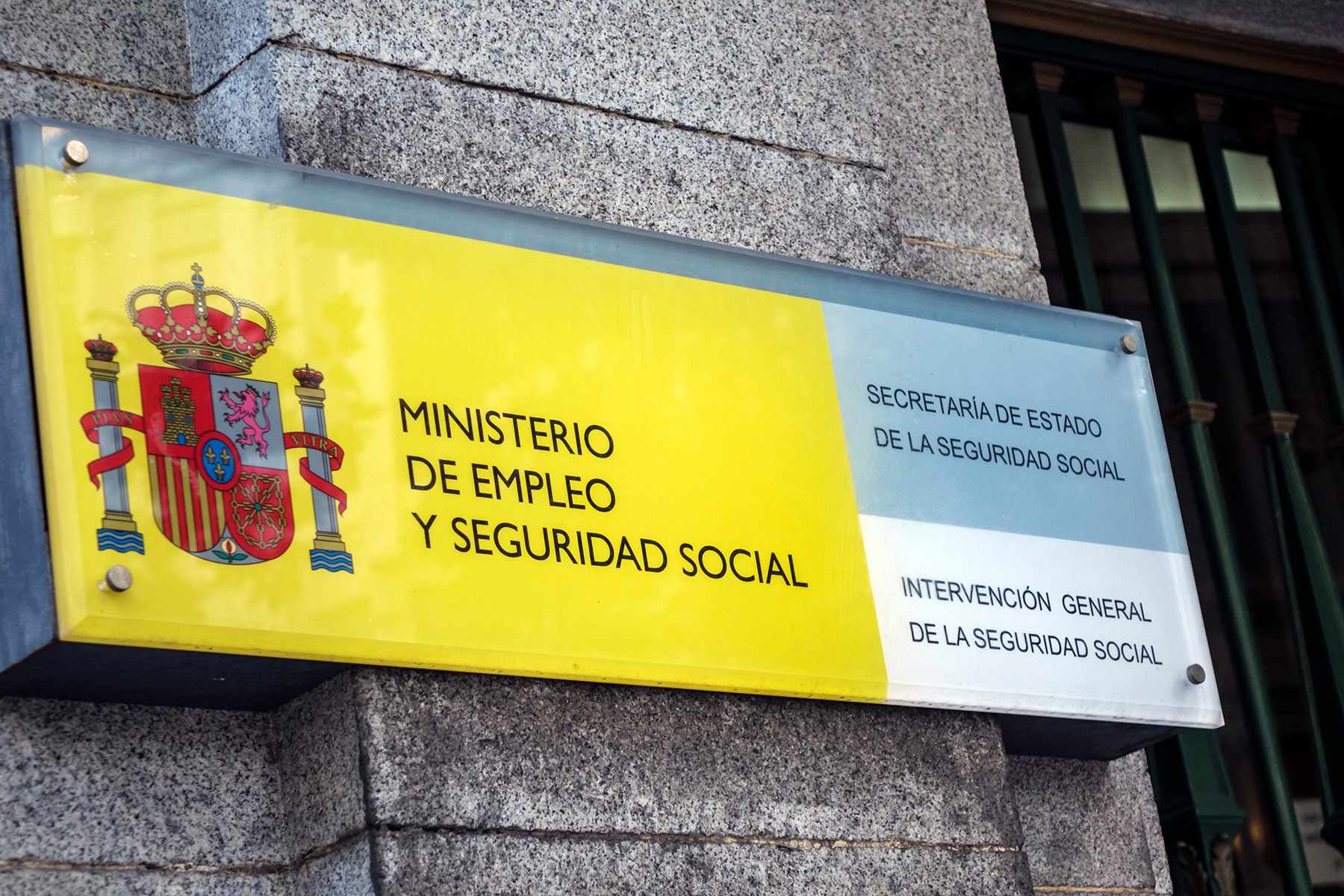
If you meet the minimum employment period, you can apply for financial support if one of these situations applies to you:
- You are unemployed but are able and willing to work
- Your employer did not renew your work contract
- Your employer has reduced your working hours and salary by between 10 and 70%
The amount of financial support you receive and the duration depends on how much you used to earn. Generally, you can expect to receive 70% of the average for the first 180 days and 50% afterward.
Starting your job in Spain: important considerations
Once you start your job, ensure you are enrolled for Spanish health insurance and social security. This covers your healthcare, state pension, workplace insurance, and other benefits. Your employer often arranges this, but you should check with them if you have to do anything yourself.

Many Spanish employers, particularly bigger companies, offer extra benefits like company-specific pensions, travel insurance, investment opportunities, and more. Workers have a minimum paid holiday entitlement of 22 working days a year in addition to Spanish public holidays.
Workers are relatively well protected by Spanish employment contracts, which are common even for temporary roles. Probation periods are typically between 2–6 months. The minimum notice period for termination of the contract is 15 days, although it can be as much as three months for those who have been employed for many years.
The average full-time Spanish work week is 40 hours. Long lunch breaks (often from 14:00 to 16:00/17:00) are still practiced in some companies. You will likely find the usual working hours and a 1-hour lunch break in many larger companies and multinationals.
Useful resources
- EURES – EU job portal
- European Commission – Integration of the foreign population in the Spanish labour force
- SEPE – unemployment benefits website