topics
tools
Expatica countries
Index Last Var.(%)
BEL 20 2119.44 0.28
DAX 6339.94 0.38
IBEX 30 6543 0.13
CAC 40 3047.94 0.32
FTSE 100 5351.53 0.03
AEX 292.76 0.23
DJIA 12454.83 -0.60
Nasdaq 2837.53 -0.07
FTSE MIB 13154.8 0.36
TSX Composite 11576.47 0.09
ASX 4081.2 -0.61
Hang seng 18713.41 0.25
Straits Times 2772.75 -0.24
ISEQ 20 500.94 1.55
You are here: Home News News Focus German 'science train': next stop Shanghai 2010?
Enlarge font Decrease font Text size


29/06/2009German 'science train': next stop Shanghai 2010?

German 'science train': next stop Shanghai 2010? The ‘Science Express,’ an innovative mobile exhibition showcasing cutting-edge German technology, has raised interest as far afield as India and China.

How will we feed nine billion people in the future? Can we ever have a disease-free world? Can robots play football?

These and many others are the questions posed and answered on the "Science Express" -- an innovative mobile exhibition showcasing cutting-edge German technology that has raised interest as far afield as India and China.

The exhibition, which is set to visit 60 German cities by November 2009, is staged on a specially-modified 12-carriage train with each car dealing with a different aspect of science, from cosmology to particle physics and evolution.

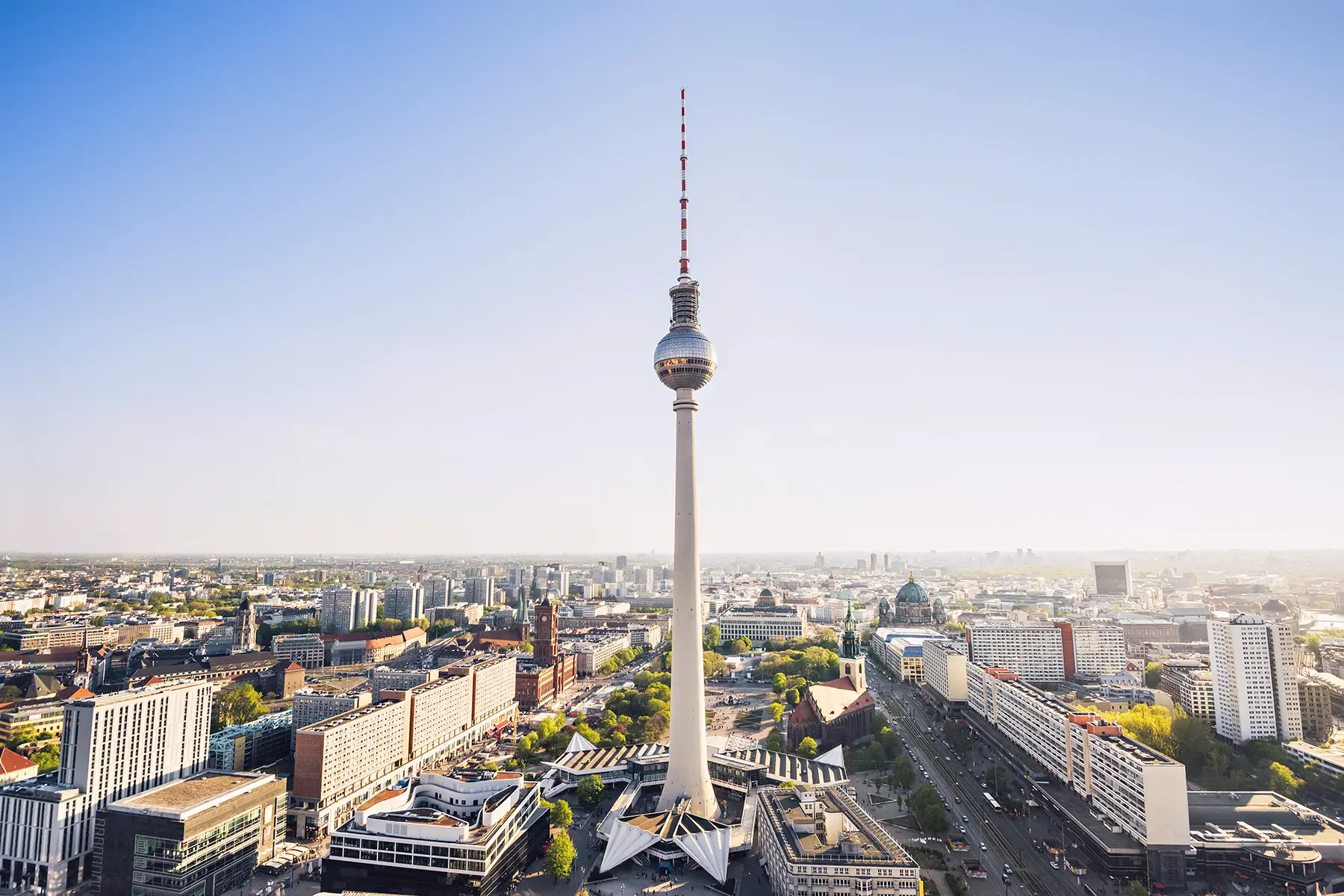
When the train rolled into platform two at Berlin's futuristic Hauptbahnhof (central station), people were queuing up to visit the free displays.

Peter Steiner of the Max Planck Society, which runs the train along with some of Germany's leading companies such as Siemens and Volkswagen, was delighted with the public response to the project, which was officially opened by Chancellor Angela Merkel on April 24.

"It's only our first day and we have already had over 2,000 visitors with 400 or 500 children," he said.

The institute aims to have 250,000 visitors across Germany, he said, adding: "but at this rate, we will easily beat that."
 AFP PHOTO/DDP/MICHAEL KAPPELER
Visitors inspect the science exhibition "Expedition Future" in a train carriage at Berlin's main train station. The "Science Express"

It is "not yet decided" whether the train will go outside Germany, Steiner said, confirming that "there is demand" from China, France, India and Poland.

"We want it to go farther," he said, adding: "The research ministry also wants to take the train to other countries."

He said that a similar train -- a joint Indo-German multimedia exhibition -- that is still rattling around India has attracted 2.25 million "passengers" in eight months.
[!break!]
One possibility might be to take the train to Shanghai for the World Expo next year, Steiner said.

Attractive to many

In Berlin, the specially-painted train was attracting a wide variety of amateur scientists from commuters in suits to backpackers and schoolchildren and others just killing time before the 14:58 to Munich.

Inside the train, there was little trace of the crisis within German industry, with every carriage showcasing the latest leading-edge technology aimed at solving the problems faced in the 21st century.

Two exhibits were especially popular with children: a 3D face-scanner that could assess whether they were happy or sad from their facial expression and a driving simulator that judged them not on how fast they could go but on how little emissions the car produced.
AFP PHOTO DDP / MICHAEL KAPPELER
Visitors look at the science exhibition "Expedition Future"

The train also featured a "science lab" where visitors could conduct their own "research."

Other popular exhibits included a "population ticker," showing the current population of the world (over 6.7 billion and rising by about one per second) and a "climbing robot" capable of shinning up cables and pipes using a camera for its eye.

"In general, I think it's a very good idea, great for the kids," 34-year-old Paul Hoffmann told AFP, who visited the exhibition with his two sons Oliver, 12, and six-year-old Tosca.

"The best thing was the robot that could play football," enthused Oliver, while his younger brother preferred the multi-coloured panels in the "house of light," designed to showcase organic light-emitting diodes (OLEDs).

Ten-year-old Juergen was similarly keen on the exhibition: "It was much better than doing science in school.”

Richard Carter/AFP/Expatica


0 reactions to this article

0 reactions to this article

Discussion Forums

Australians in Germany

BUY FAKE PASSPORT, DRIVING LICENSE,ID CARD

Irish in Germany

BUY FAKE PASSPORT, DRIVING LICENSE,ID CARD

Canadian in Germany

BUY FAKE PASSPORT, DRIVING LICENSE,ID CARD

Discuss German Culture

BUY FAKE PASSPORT, DRIVING LICENSE,ID CARD

Americans in Germany

BUY FAKE PASSPORT, DRIVING LICENSE,ID CARD

participate in the forums

Inside Expatica
The ABCs of the German school system

The ABCs of the German school system

What you need to know about German schools and daycare.

German immigration and residency regulations

German immigration and residency regulations

Want to move to Germany but haven’t figured out the details? Check out Expatica’s overview of the German permit system.

Driving in Berlin: Rules, habits and fines

Driving in Berlin: Rules, habits and fines

In part one of our two part series, we cover the driving culture in Berlin, where to park and buy gas and, most importantly, the laws.

Looking for work in Germany: The in depth version

Looking for work in Germany: The in depth version

Our comprehensive guide includes information on how to find work, recruitment agencies, employment contracts and labour law.