topics
tools
Expatica countries
Index Last Var.(%)
BEL 20 2134.42 0.71
DAX 6413 1.15
IBEX 30 6611.5 1.05
CAC 40 3079.92 1.05
FTSE 100 5401.51 0.93
AEX 295.95 1.09
DJIA 12454.83 -0.60
Nasdaq 2837.53 -0.07
FTSE MIB 13255.83 0.77
TSX Composite 11576.47 0.09
ASX 4120.2 0.96
Hang seng 18828.09 0.61
Straits Times 2795.38 0.82
ISEQ 20 502.95 0.40
You are here: Home News News Focus Roma kids discover the power of school
Enlarge font Decrease font Text size


07/10/2009Roma kids discover the power of school

Roma kids discover the power of school A new programme helps Roma children get ready for kindergarten -- a first step toward reducing the high rate of school failure among the Roma minority.

Many of Shakira and Versace's friends in the small Romanian town of Barbulesti do not know how to hold a pencil. Like many Roma kids, they have never had one.

However there is a growing realisation that to change the desperate state of the Roma community, you have to catch them young.

And now Shakira, Versace and 18 other children between three and five years old have embarked on an intensive course to get them ready for kindergarten -- a first step to reducing the high rate of school failure among the Roma minority.

Over the four weeks before school started on September 15, they were given lessons ranging from how to express themselves to basic hygiene.

"The sooner we start, the better we develop the children's knowledge and social abilities," says Miralena Mamina from Save the Children, the non-governmental group that is organising the programme for 860 kids who will be going to school for the first time.

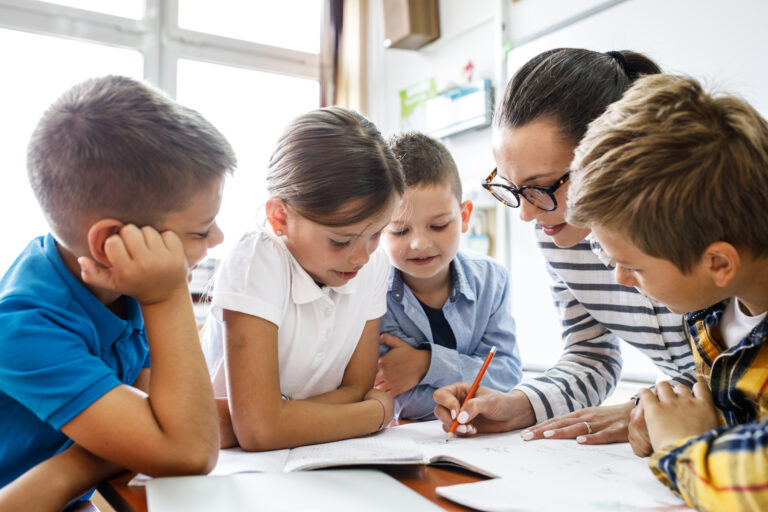
In a room with pictures of fairy tale characters pinned on the walls next to numbers and letters, teacher Mihaela Rantes smiles as her young charges sit colouring or assembling plastic pieces.

From time to time she asks for help from an assistant, whose official title is "mediator," who translates from Romanian to Romani, the traditional Roma language.

AFP PHOTO / DANIEL MIHAILESCU
Roma children with their teacher during a drawing lesson in Barbulesti kindergarten, 70kms east from Bucharest, on 13 August 2009
 
A context of discrimination

Romania has one of the largest Roma communities in Europe: 530,000 according to the 2002 census and some 2.5 million, according to non-governmental organisations. (Fearing discrimination, many do not declare their ethnic origin.)

Their worries are fuelled by events such as a recent concert by American pop singer Madonna in Bucharest, when several thousands fans jeered her after she condemned "discrimination against Romas and gypsies in general in eastern Europe."

In Barbulesti, southern Romania, more than 98 percent of the 7,000 inhabitants are ethnic Romas.

Constantin Stoica, a 55 year-old former locksmith, started work as a "mediator" three years ago after finishing an Education Ministry course. He talks endlessly with parents from his Roma community to convince them of the importance of going to school.
[!break!]
"I give them my example,” he said, adding that all of his 30 nephews went to school or will go. “Even at my age, I went to school."

Countless Roma children do not go to school or drop out after primary school. According to a 2008 government study, 19 percent of Romas between the ages of 18 to 29 have never been to school, compared to 1.8 percent of non-Roma Romanians.

Poverty, distrust in institutions seen as racist and early marriages in the traditional communities are among the complex causes of this lack of schooling.

"Due to enduring social exclusion, school is not seen as a valuable thing," said Nicoleta Bitu of the Roma rights group Romani Criss. "One can not achieve anything with it.”

“Even if you do great in school you remain society's 'tzigan,'" she added, referring to the pejorative term for gypsy in Romania. “There is always someone to remind you that you are just a gypsy."

She said that some teachers use language which discourages children from continuing school. And despite an official ban on segregation between communities in schools, Romani Criss keeps bringing cases to light.

AFP PHOTO / DANIEL MIHAILESCU
Roma children play with their teacher on the courtyard of the kindergarten in Barbulesti

A slow progress?

Authorities admit there is still a long way to go but stress they are making progress.

Gheorghe Sarau from the Education Ministry said there were 129,000 Roma children registered in schools in 1990 and the figure has since risen to 260,000.

Some 650 mediators like Stoica liaise between schools and Roma communities. Five hundred people have been trained to teach Romani and up to 90 percent of the 500 places reserved each year in universities for Roma students are occupied, he said.

"Learning Romani and learning about Roma culture helps young people know their roots, build their self-esteem and value their ethnic heritage," Sarau said.

The National Agency for Romas favours active efforts to fight school failure that also include house rehabilitation and finding jobs for parents.

Every morning in Barbulesti, a parent attends classes to be more involved in the education.

"My daughter brags everyday about what she has done at the kindergarten," said Loredana Dinca, a 29-year-old mother of seven, who is delighted that her children can help her read bills and other documents.

Anca Teodorescu/AFP/Expatica

Head photo credit: Zingaro. I am a gipsy too.


0 reactions to this article

0 reactions to this article

Discussion Forums

Technology in Spain

Sat phones/internet links

English in Spain

What is the best travel insurance cover to Spain?

American in Spain

U.S. citizens, plan to vote in 2012? Did you know...

Relocation to Spain

thinking of moving to madrid

Jobs in Spain

Job Agencies or how to find work.

participate in the forums

Inside Expatica
Editor's Guide: Getting Started in Spain

Editor's Guide: Getting Started in Spain

Expatica's Getting Started section will provide practical information on how you can open a bank account, exchange your driving licence, improve your Spanish, and more.

Groups and Clubs in Madrid

Groups and Clubs in Madrid

Here's a guide to an extensive list of groups and clubs in Madrid for expats, from sports groups to social and family gatherings.

Groups and Clubs around Spain

Groups and Clubs around Spain

A brief introduction to our Tax section for Spain, from help with inheritance tax to accounting advice.

Groups and Clubs in Barcelona

Groups and Clubs in Barcelona

Here's a short introduction to our Banking section for those living in Spain, from what to ask the experts to opening a Spanish bank account.