'%20id='ico-down'%20stroke='%23000000'%20stroke-width='1.5'%3e%3cg%20transform='translate(1092.250000,%20254.750000)'%3e%3cpolyline%20id='Path-2-Copy-4'%20transform='translate(5.500000,%202.750000)%20scale(1,%20-1)%20rotate(-180.000000)%20translate(-5.500000,%20-2.750000)%20'%20points='0%200%205.5%205.5%2011%200'%3e%3c/polyline%3e%3c/g%3e%3c/g%3e%3c/g%3e%3c/svg%3e)



'%20fill='%23000000'%3e%3cg%20id='icons'%20transform='translate(56.000000,%20160.000000)'%3e%3cpath%20d='M144,7339%20L140,7339%20L140,7332.001%20C140,7330.081%20139.153,7329.01%20137.634,7329.01%20C135.981,7329.01%20135,7330.126%20135,7332.001%20L135,7339%20L131,7339%20L131,7326%20L135,7326%20L135,7327.462%20C135,7327.462%20136.255,7325.26%20139.083,7325.26%20C141.912,7325.26%20144,7326.986%20144,7330.558%20L144,7339%20L144,7339%20Z%20M126.442,7323.921%20C125.093,7323.921%20124,7322.819%20124,7321.46%20C124,7320.102%20125.093,7319%20126.442,7319%20C127.79,7319%20128.883,7320.102%20128.883,7321.46%20C128.884,7322.819%20127.79,7323.921%20126.442,7323.921%20L126.442,7323.921%20Z%20M124,7339%20L129,7339%20L129,7326%20L124,7326%20L124,7339%20Z'%20id='linkedin-[%23161]'%3e%3c/path%3e%3c/g%3e%3c/g%3e%3c/g%3e%3c/svg%3e)
'%20fill='%23000000'%3e%3cg%20id='icons'%20transform='translate(56.000000,%20160.000000)'%3e%3cpath%20d='M335.821282,7259%20L335.821282,7250%20L338.553693,7250%20L339,7246%20L335.821282,7246%20L335.821282,7244.052%20C335.821282,7243.022%20335.847593,7242%20337.286884,7242%20L338.744689,7242%20L338.744689,7239.14%20C338.744689,7239.097%20337.492497,7239%20336.225687,7239%20C333.580004,7239%20331.923407,7240.657%20331.923407,7243.7%20L331.923407,7246%20L329,7246%20L329,7250%20L331.923407,7250%20L331.923407,7259%20L335.821282,7259%20Z'%20id='facebook-[%23176]'%3e%3c/path%3e%3c/g%3e%3c/g%3e%3c/g%3e%3c/svg%3e)

Planning your Spanish wedding may take some time to arrange in terms of gathering and submitting all the required paperwork. The bureaucracy involved will also vary depending on the type of ceremony you have and where you have it. However, it will all be worth it when you are exchanging your vows in a beautiful castle near Madrid or a private villa in Sevilla.
Discover all there is to know about arranging Spanish weddings, including the following:
- An overview of marriage in Spain
- What types of marriages are possible in Spain?
- Gay marriage in Spain
- Civil partnerships in Spain
- The legal requirements for getting married in Spain
- Wedding planning in Spain: step by step
- The cost of a Spanish wedding
- Top wedding locations in Spain
- Popular Spanish wedding traditions and customs
- Useful resources
Cigna Global
Enjoy peace of mind while living in Spain with Cigna Global’s long-term international health insurance plans (12+ months). Get tailored coverage, direct billing with many providers, complex case management, and global care on demand, with access to a network of 1.5+ million doctors, specialists, and therapists.

An overview of marriage in Spain
According to statistics, the marriage rate between men and women in Spain has been gradually declining in recent decades; there were 3.12 marriages per 1,000 inhabitants in 2021, a far cry from the rate of 7.14 seen in 1977. Interestingly, marriage doesn’t seem to be a priority for same-sex couples either.

In fact, since same-sex marriage (matrimonio igualitario) was legalized in Spain in 2005, the number of annual nuptials between same-sex couples has remained fairly stable; with 5,108 weddings taking place in 2019, compared to 4,313 in 2006.

Statistics from 2021 also show that couples in Spain are waiting until later in life to tie the knot when compared to other European countries. Indeed, the average age at marriage in Spain is 39.5 years for men and 36.7 years for women, one of the highest in the EU. Notably, couples in the Canarias are choosing to wait even longer, with the average age at marriage standing at 41.63 years old for men and 38.52 for women.
Attitudes towards marriage in Spain
Similar to other European countries, attitudes towards marriage are changing in Spain, as society continues to move away from traditional ideals to more modern ways of living. Indeed, marriage is no longer a prerequisite for couples in Spain. This is shown by the country’s declining marriage rate and the increasing age of men and women at first marriage.
Sociologist Alfonso Perez-Agote believes that the ongoing economic crisis and a shift from the traditional family unit to a more secular definition are largely behind this trend. The urbanization of Spain, along with the influx of immigrants and migration of Spaniards to other countries, have also sparked a shift. As a result, couples nowadays face less social pressure to marry quickly and can instead take more time to find the right partner, develop their careers, and save money for the future.
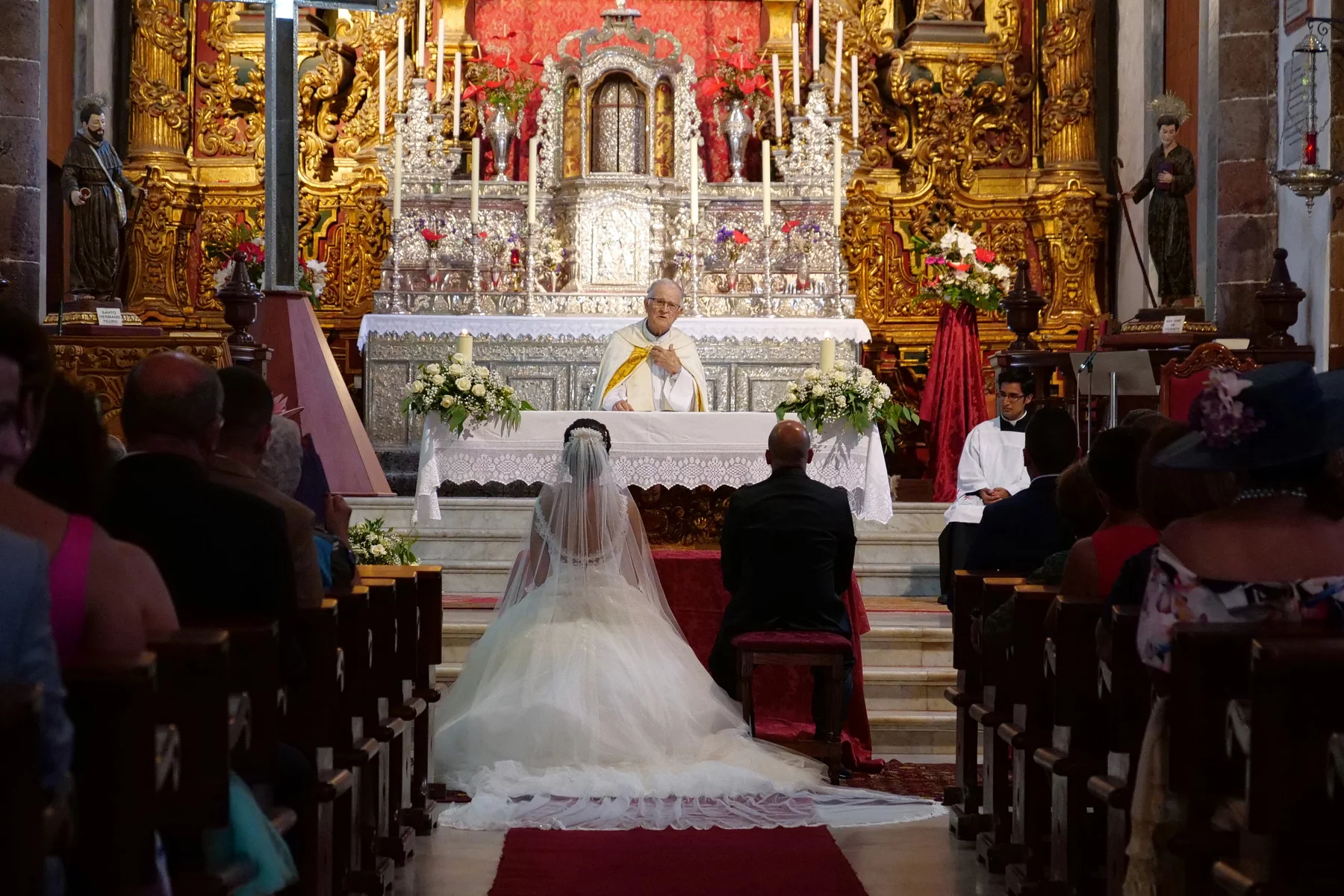
Despite being a largely Catholic country, couples in Spain have also moved away from traditional religious weddings in recent years. In fact, according to figures released by Spain’s National Statistics Institute (INE), religious wedding ceremonies are at a historical low, accounting for only 22% of the total marriages in 2016.
What types of marriages are possible in Spain?
Essentially, there are two types of weddings in Spain, as follows:
Civil marriage
Couples can legally get married in Spain in a ceremony without a religious aspect. A civil wedding can take place at the Civil Registry Office (Registro Civil), District Court (Juzgado), or in the town hall where it will be performed by the Mayor or a delegated Councillor.
Religious marriage
Couples in Spain can have a Roman Catholic, Protestant, Jewish, or Muslim wedding without having to have a civil marriage ceremony beforehand. The marriage must be registered with the civil authorities and performed by a licensed marriage officer.
Gay marriage in Spain
Same-sex couples in Spain can choose to enter a civil marriage or a civil partnership. However, a civil partnership doesn’t grant them the same rights or financial benefits as a civil marriage. It is also important to note that a same-sex marriage that is registered in Spain might not be recognized in a country that does not accept gay marriage.

Same-sex marriage was legalized in Spain in 2005, guaranteeing identical rights to all married couples regardless of sexual orientation. Despite strong opposition from the Catholic authorities, 66% of the Spanish population voted in favor of the law in 2005. Remarkably, this rose to 75% after the passing of the law. Today, Spain remains one of the most LGBT+ friendly countries in the world and offers a diverse and welcoming scene for all.
Civil partnerships in Spain
Also known as a civil union or Pareja de Hecho (in Spanish), this is a legal union between two individuals who live together and share a common domestic life, but who are not married. It can be arranged by a notary or by applying for registration in your local Registry of Unmarried Stable Partnerships (Registro de Parejas de Hecho).
Civil partnerships are regulated at a regional level in Spain. Therefore, you will need to check the precise requirements with your autonomous community. That said, generally speaking, anyone in Spain can register a civil partnership provided that they meet the following requirements:
- They are over 18 years old or are an emancipated minor (16 and above)
- They are single and not married; note, if you have registered your civil union and want to get married: you must dissolve the civil relationship before you get married.
- At least one of the two members of the couple must be registered in the autonomous community where the union will be registered.
- They can demonstrate a minimum period of joint cohabitation. Note; this can vary between autonomous communities; for example, in Madrid, couples must have lived together for 12 months, whereas in Catalonia and Aragon, no minimum period is required. Nevertheless, both partners must be registered at the same address.
The legal requirements for getting married in Spain
The legal requirements for registering your marriage in Spain depend on your civil status, your nationality, and the region that you live in. That said, to qualify for marriage in Spain, both parties must be at least 18 years old.
Additionally, one of the partners must be a Spanish citizen or must have been a resident in the country for at least the past two years; they must be able to present a certificate of residence (Certificado de Empadronamiento or “Padrón”).
The couple will also need to provide proof that they are legally allowed to get married. This is known as a certificate of no impediment (Certificado de No Impedimento). If you aren’t Spanish, then you may need to obtain this from your home country’s Embassy or Consulate.
Necessary paperwork and documentation
To get married in Spain, you will typically need to have the following documentation:
- Long form birth certificate, notarized and translated into Spanish
- Valid passport and at least four copies – to be used when you apply for the Empadronmiento, Residencia and file for the marriage
- Certificate of Marital Status (Certificado de Estado Civil)
- Certificate of No Impediment (Certificado de No Impedimento), which can be obtained from the registrar office of the home country
- Divorce degrees (Certificados de divorcio) – if applicable
- Spanish Town Hall Registration Certificate (Certificado de Empadronamiento or “Padrón”)
- Extranieria application form – print three copies. Complete the extranjeria form and file it at the national police station. Remember to bring with your passport and a photocopy of it.
Note: All foreign documents must be translated into Spanish and have an official seal, the Certificate of Apostille of the Hague (apostilla de la Haya). The translations must also be less than three months old. If you need to translate your documents, there are a number of online platforms you can use to find the right translator for you. These include:
While arrangements for a civil wedding can vary across the autonomous communities, it typically takes from 30 days to four months.
Additional documents for a Catholic wedding
If you wish to have a Catholic wedding in Spain, then you will also need to provide proof of your religious background, such as certificates of baptism and a letter from the parish priest. The Baptismal certificate has to be issued up to six months before your wedding and authenticated by the issuing Bishopric. A Spanish translation must also be attached.
You may also need to provide a “Freedom to Marry” letter from your parish priest, which indicates that you have fulfilled the premarital course requirements.
Arrangements for a Catholic wedding in Spain normally take 30 to 50 days.
Wedding planning in Spain: step by step
Whatever the size of your Spanish wedding, you will always need to gather and submit some documents beforehand. Therefore, make sure you leave enough time to plan your wedding, based on the timelines outlined below.

If you don’t speak Spanish, it is also advisable to either hire a Spanish solicitor or to get someone who speaks Spanish to help you with all of the paperwork so that the process runs smoothly.
Step one: Apply for a marriage license
While the legal requirements for getting married in Spain vary depending on the type of ceremony you wish to have, all couples must first apply for a certificate granting permission to marry (Certificado de Capacidad Matrimonial) at their local Civil Registry Office. If you aren’t Spanish, then you may need to obtain the Certificado de Capacidad Matrimonial from your home country’s Embassy or Consulate.
You will need to bring along a photocopy of your passport along with the necessary documents when you file for your marriage at the local registry office. You will also need one of your two witnesses (with ID) to accompany you. The officials will then process your information and register you on their system. The intent to marry is then displayed on the public notice board in their office for 21 days. After 10 days, you can call the office to request an interview date; this is part of the marriage process.
If you are having a religious wedding, the church administrators might wish to take care of this application process on your behalf, so you should check with your local diocese beforehand. For religious weddings, all non-nationals also need to send some specific documents to the Bishop of the diocese to receive special permission to marry. This can take up to four weeks to process, so you should aim to send all your documents to the church at least two months before your wedding date.
Step two: Attend the interview
Once the 10 days are up, you can call to arrange an appointment for the interview process. Both applicants must attend separate interviews at the town hall and answer a variety of questions. This is to determine the validity of the relationship and ensure that the partners are genuine applicants.
If the marriage application is considered valid, then the marriage will be registered directly in the central registry in Spain or through the corresponding Spanish consulate. The marriage can then go ahead.
However, just bear in mind that you may have to wait up to six weeks for the appointment date. With this in mind, it is better to begin this process as soon as possible to avoid delaying your big day.
Step three: Plan your wedding!
Once you have taken care of the legal procedure, planning your big day is fairly similar to other Western countries. To take the stress out of organizing their big day, some couples choose to hire a wedding planner. Many also join local Facebook groups to seek recommendations and advice from others who have personal experience of getting married in Spain.
Below are some things to consider when planning your big day:
- 1 year out: Decide on your budget, location for ceremony, location for reception (if applicable), and guest list.
- 10 months out: Book your venue(s), begin investigating suppliers such as entertainment and florists, and choose your wedding dress.
- 6 months out: Gather the documents for your wedding, and book your honeymoon.
- 4 months out: Look for wedding rings, invitations and favors, and book a photographer.
- 3 months out: It’s time to send out your invitations, book transport, and lock in your catering and entertainment selections.
- 1 month out: Create a floor plan.
- 2 weeks out: Confirm details of your vision with the photographer.
- 1 week out: Collect your choice of wedding clothes.
Step four: Register your marriage certificate
Civil marriages are effective immediately following the ceremony and the official who conducted it will register the marriage with the Civil Registry. After the wedding, you will receive a marriage certificate and a Libro de Familia (family book) from the Spanish Ministry of Justice. This contains stamped copies of the marriage, the birth of children, and so on.
Following a religious wedding, you will need to deliver the marriage papers to your local Civil Registry Office within one week in order to legalize them.
Civil partnerships are recorded in the Civil Registry two or three weeks after the notary constitutes and registers the union. They will do this immediately once you have submitted all the paperwork.
The cost of a Spanish wedding
The average cost of a wedding in Spain stood at €22,000 in 2021. However, naturally, the cost of your Spanish wedding will depend on a number of factors such as the type of ceremony you wish to have, the location, and the size of the guest list. As a result, the total cost can range anywhere between €12,000 and €32,000.

Here is a breakdown of wedding costs and fees to consider:
Administrative fees
- Civil marriage – this can range from €400 to €3,000. The venue may charge for the ceremony and reception together. In addition, you will have to source chairs (€4 to €25 per chair), a vehicle to transport the chairs, and an Officiant (€300 to €600).
- Catholic church wedding – a donation of between €300 and €700 to the church plus a €250 to €350 donation to the priest
- Consular document – proving there is no impediment to your marriage in Spain, this can cost up to €150
- Apostille stamp – this will typically cost €15 to €20 per document
Venue costs
- Luxury venue – this can cost around €20,000 (including ceremony fees, catering for 80 to 100 guests, a party band or DJ, and an open bar for two hours)
- All-inclusive hotel wedding package – about €160 per person
- Small villa (with space for a garden ceremony) – around €3,000 (including ceremony) with 20 guests
- Catering – around €150 per person (price includes linen, cutlery, crockery, staff and equipment)
Note: Venue hire can be up to €1,000 cheaper off-season, and you could save 20% to 40% by having a midweek wedding.
Additional costs
- Wedding photographer – from €1,000 to €6,000
- Bridal bouquet – around €120 to €150
- Floral table centerpieces – from €65 to €1,000 per table
- DJ – about €960 to €2,000, including lighting and equipment
- Spanish traditional guitar player – €375 (plus) for an hour and a half
- Four-piece band – €2,500 to €10,000
- Mercedes E-Class –from €250 to €450
- Shuttle bus – around €500 (pick-up and drop-off within a 20km radius)
- Hair and makeup – around €120 per person (without a trial session), or €300 to €400 for them to come to you.
- Wedding planner – between €4,000 and €7,000
Top wedding locations in Spain
Fortunately, Spain is brimming with romantic locations in which to host your dream wedding. The south and east of the country are the most reliable when it comes to beautiful weather. The Costa del Sol and Costa Blanca, for instance, enjoy more than 300 days of sunshine each year.
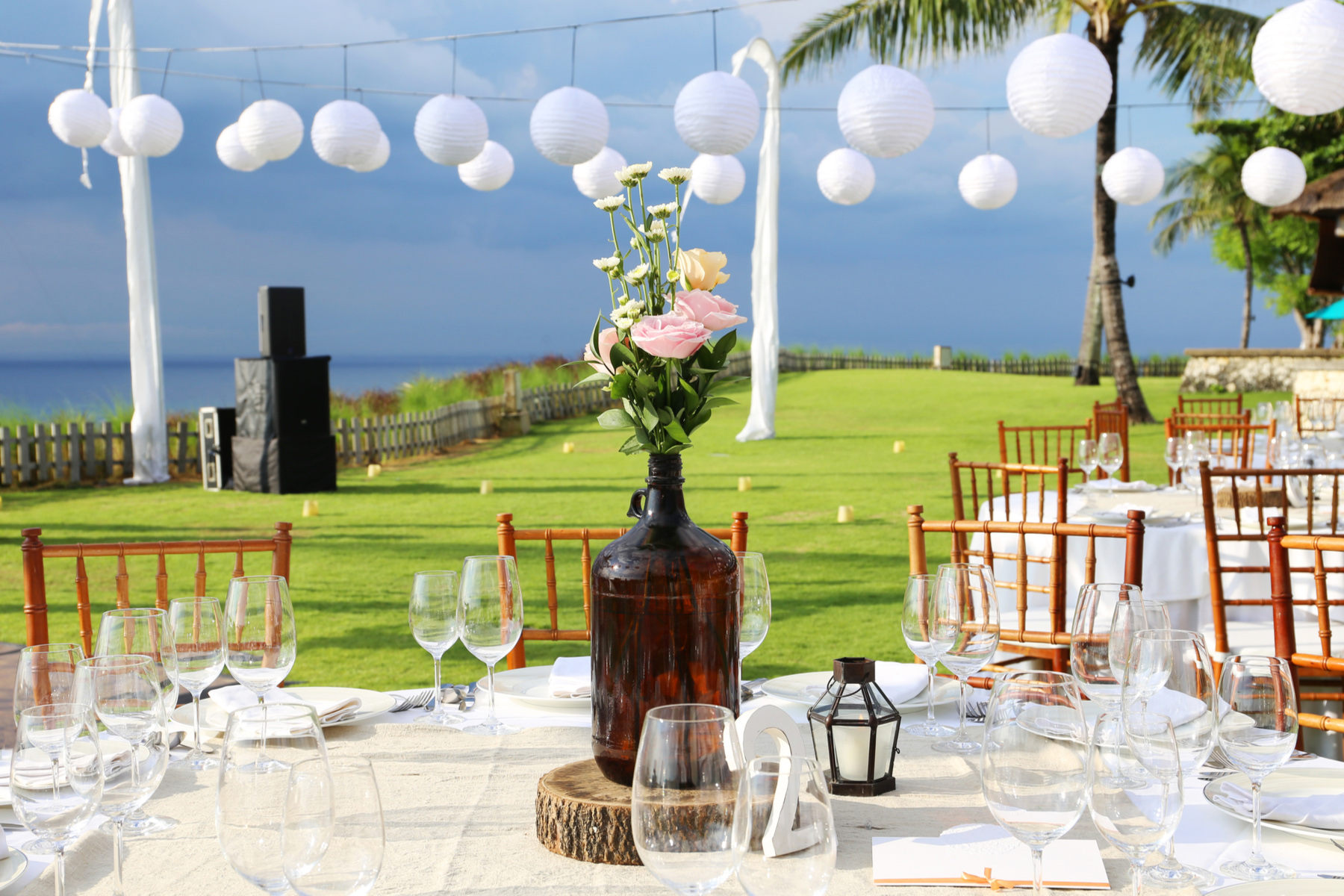
Generally speaking, the most popular locations for Spanish weddings include castles, towers, luxury hotels, and private villas. Some of the most iconic venues are the Atzaró hotel in Ibiza and the Son Brull Hotel and Spa (formerly a 12th-century monastery) in Majorca. The Hotel Palacio Villapanés in Seville and the imposing Peralada Castle in Girona are also popular options. Meanwhile, the charming Vinuelas Castle is conveniently located just a stone’s throw from Madrid, and Belmonte Castle in Cuenca looks like it’s straight out of a fairytale.
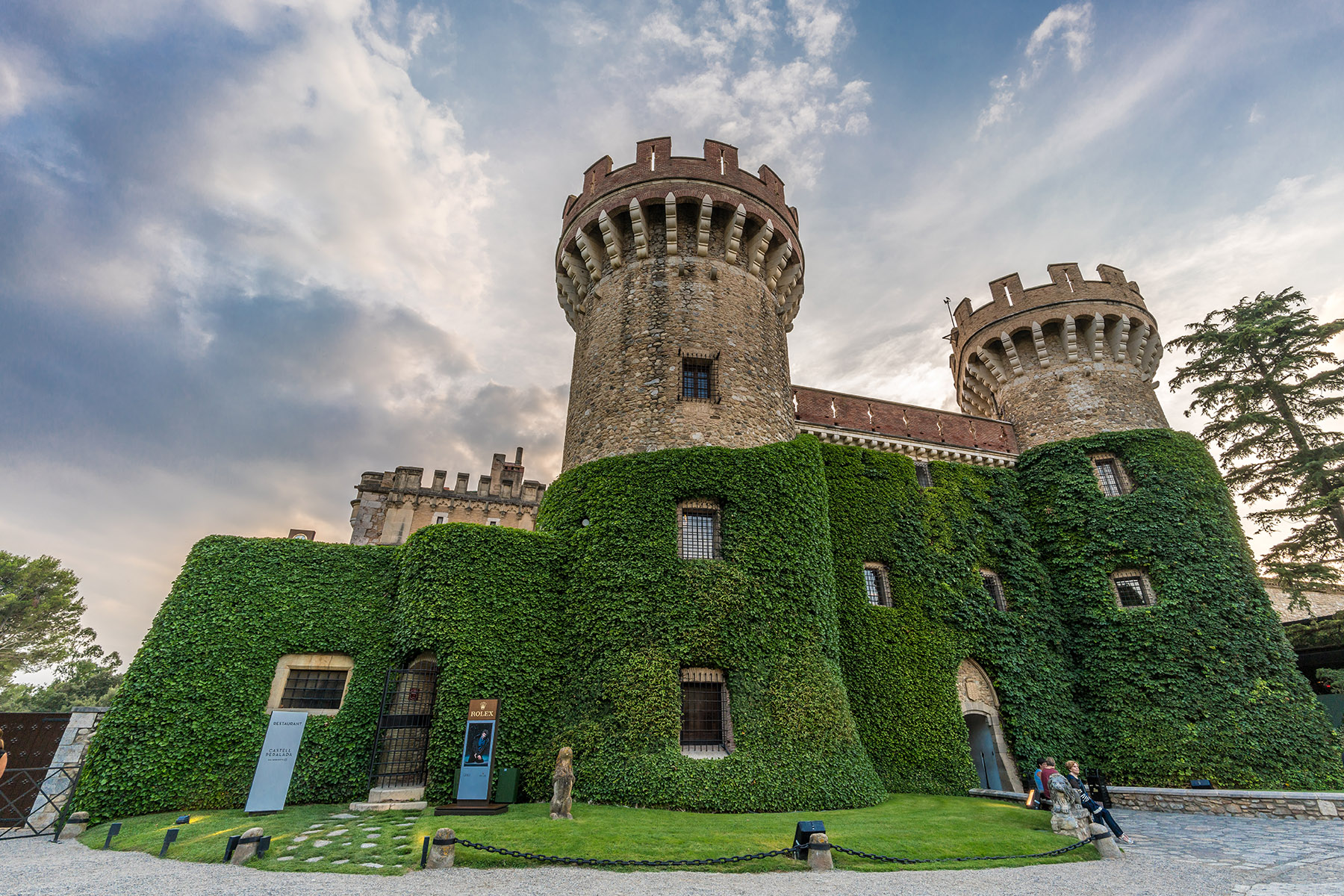
Recently, Spain has seen a trend for greener wedding venues and locally sourced produce as couples are looking to lower their carbon footprint. Some brides are also sharing floral arrangements between their different wedding parties at the same venues. Furthermore, caterers are using paper straws and edible wedding favors.
Spain is also one of the world’s most popular locations for destination weddings. However, the majority of Spanish couples prefer to have their marriage ceremony close to home so that close friends and family can easily attend. This is partly due to the close social ties in Spanish society, as well as the economy.
Popular Spanish wedding traditions and customs
That said, like every country, Spain has its own unique wedding traditions and customs which many couples still honor today. Below are some of the most common ones.
Gold coins and orange blossom
In Catholic Spanish weddings, the groom presents the bride with 13 gold coins (arras) in an ornate box for good luck. The rings symbolize Jesus and the apostles and the priest blesses them.
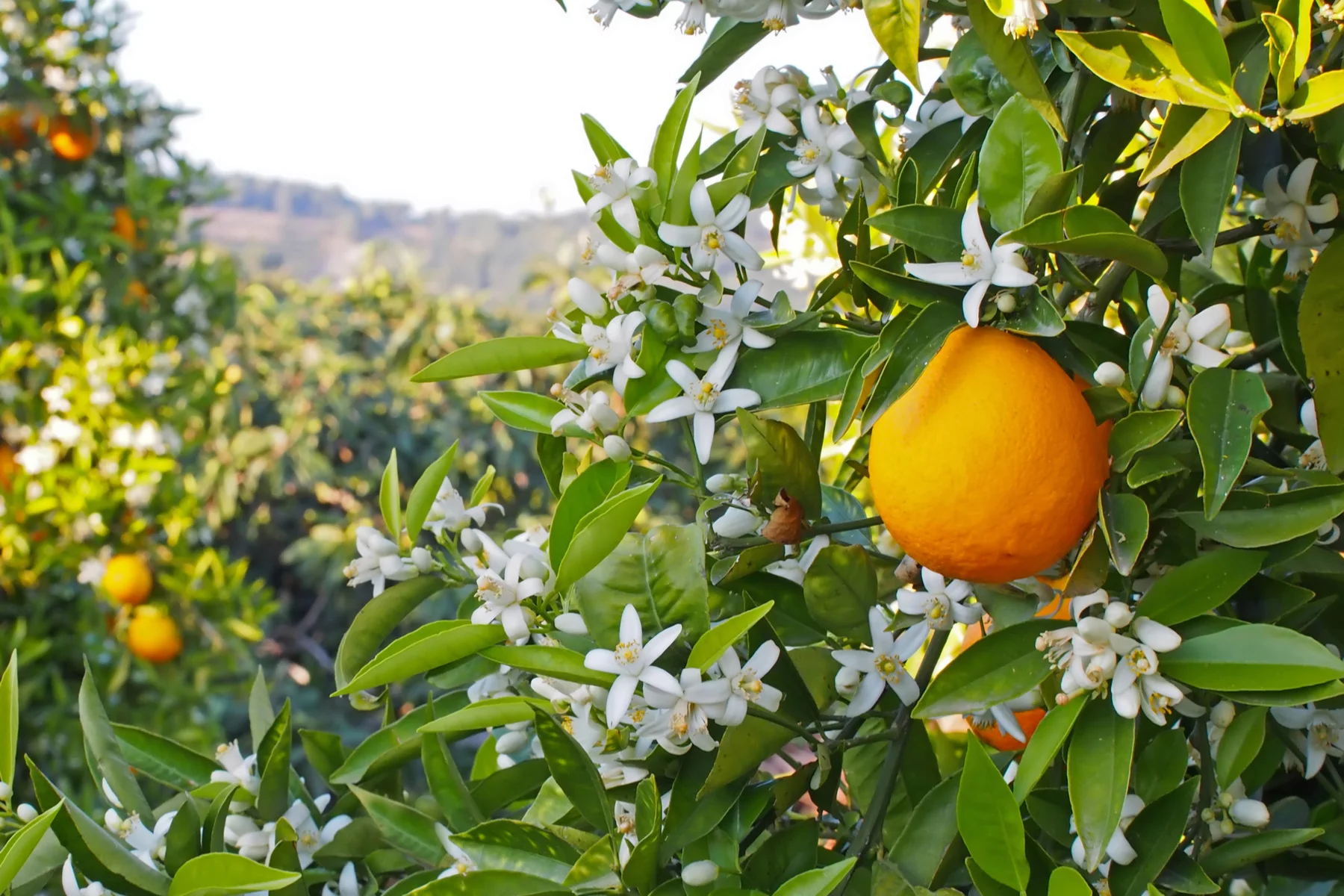
Orange blossom is the traditional Spanish wedding flower and this custom came to Spain from the East during the Crusades. The white petals represent purity, and since orange trees flower and bear fruit at the same time, they represent happiness and fulfillment. Read more about the meaning of flowers around the world.
Wedding rings and pins
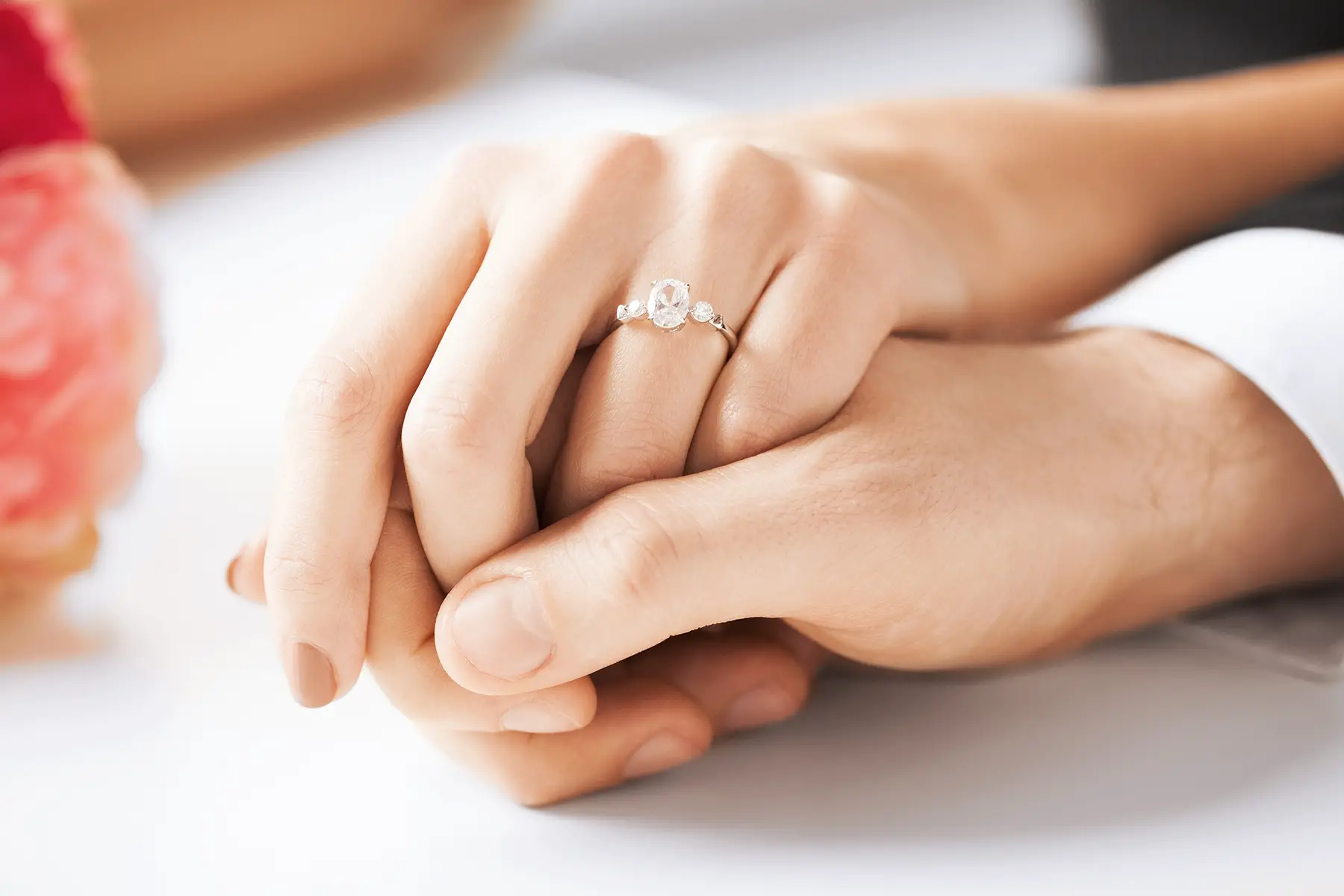
In Spain, women also keep their engagement ring on their left hand but wear their wedding ring on their right hand. The groom also wears his wedding band on the right hand, rather than the left.
The bride also gives corsages or pins to her close female friends, and the singles friends wear them upside down. If one of them loses theirs, it means they are next in line for marriage!
A family affair
One of the most surprising things about Spanish wedding traditions is that you don’t normally see bridesmaids and groomsmen. Instead, the event is more of a family affair. The godparents also help out and prevent the couple from seeing each other before the wedding. And before the bride makes her big entrance, the mother of the groom escorts him up the aisle.
Dancing and bidding
The traditional wedding dance is called the Sequidillas Manchegas. During this dance, the guests pay the bride to dance, and may even bid on her garter. During some weddings, the groom’s tie is also cut up and guests ‘buy’ pieces of it. This money all goes towards their new life together.
Wedding veils
Traditionally, Spanish brides used to wear a black silk dress, although nowadays, white is far more common. They also used to wear a veil every day after the wedding. Occasionally, married Spanish women still wear veils for special occasions such as attending weddings.
Useful resources
- Civil Registry Office
- Ministry of Justice – provides a list of Civil Registries in Spain
- Wedding Photojournalist Association – find wedding photographers in Spain
- Weddingwire – a database of wedding planners with reviews and more
- Celebrant Spain – a wedding blog that provides information about wedding ceremonies in Spain