
'%20id='ico-down'%20stroke='%23000000'%20stroke-width='1.5'%3e%3cg%20transform='translate(1092.250000,%20254.750000)'%3e%3cpolyline%20id='Path-2-Copy-4'%20transform='translate(5.500000,%202.750000)%20scale(1,%20-1)%20rotate(-180.000000)%20translate(-5.500000,%20-2.750000)%20'%20points='0%200%205.5%205.5%2011%200'%3e%3c/polyline%3e%3c/g%3e%3c/g%3e%3c/g%3e%3c/svg%3e)




If you want to live in Spain long-term or even permanently, you will need to apply for permanent residence or Spanish citizenship. Discover how the residency rules work, including eligibility, costs, and application process.
Continue by reading the following sections:
Spanish citizenship: the basics
After you have lived in Spain for five years, you can apply for permanent residence. After 10 years, you can apply for Spanish nationality. Some exemptions exist that allow certain people to apply sooner. For example, you can apply if you are married to a Spaniard or the child of a Spanish parent. Both Spanish citizenship and permanent residency allow you to stay living in Spain, but some differences exist between the two.
Should you choose permanent residency or citizenship?
Holding an EU long-term permanent residence permit allows you to stay on as a resident in Spain while retaining your own nationality and passport. As a Spanish permanent resident, you can enjoy most of the same benefits as Spanish citizens. You must, however, be able to fulfil certain conditions. This includes being able to support yourself financially. You can move around the EU for limited periods, and longer with permission.
If you become a Spanish citizen, however, you will need to give up your original nationality and passport, unless you qualify for an exemption (see below). You will enjoy all the same rights as other Spanish citizens. In addition, you will become a citizen of the EU, meaning you are free to move around within it. You can also vote in European elections.
Brexit: British expats in Spain
Uncertainty remains around the UK’s departure from the EU, but there are signs that British expats living in Spain will be protected. In March 2019, the Spanish foreign minister announced that the 400,000 UK citizens living in Spain would be granted residency rights in the event of a ‘no deal’ Brexit.
It is not totally clear how this would work just yet. British nationals might need to apply for a foreigner identity card by the end of 2020. This process would be nearly automatic.

Whatever happens, expats who already live in Spain could consider applying for Spanish citizenship if they meet the necessary criteria to main EU access. This would, however, mean surrendering their British citizenship.
It is possible that British expats may need to apply for a Blue Card in the future. This is an EU-wide work permit that allows high-skilled, non-EU citizens to work in Spain and other EU countries.
How to apply for permanent residence in Spain
If non-EU nationals have legally lived in Spain for five uninterrupted years, they can apply for an ‘EU long-term residence permit’. This allows them to stay in Spain indefinitely working or otherwise, under the same conditions as Spanish citizens.
In order to apply for a permit, you must be able to prove that you have adequate financial resources to provide for yourself and your family (if applicable), such as a Spanish pension, scholarship, or salary. You must also have proof of public or private health insurance in Spain.
You might also have to submit:
- A valid passport;
- Proof of legal residence in Spain (e.g., a long-term rental contract in Spain or receipts for rent);
- Criminal record certificate issued by the authorities in your home country;
- Medical certificate (certificado medico), if not already supplied;
- Proof that health assistance is guaranteed during your residence in Spain;
- Marriage or divorce certificate or other papers relating to your marital status (translated into Spanish if required).
Benefits of permanent residence in Spain
When you have the permit, you can work freely and enjoy social services and benefits in Spain. You can generally move between other EU member states for up to three months. This may be longer if it is for certain purposes and you have a permit.
If you hold a Blue Card from another EU member state, and have lived elsewhere in the EU for the same period, this also grants you long-term residence in Spain. However, you must have lived in the country for two years beforehand.
If you hold an EU long-term residence permit granted by another EU member state and want to stay on in Spain, you will have to relinquish your long-term residence status in the other country. You will also need to apply for an EU long-term residence permit from the Foreigner’s Office (Oficina de Extranjeros) in Spain.
How to get Spanish citizenship
You can apply for Spanish nationality after 10 years of residence in Spain. You can also acquire Spanish nationality by getting married in Spain or birth, even if you or your Spanish parents were born outside Spain.
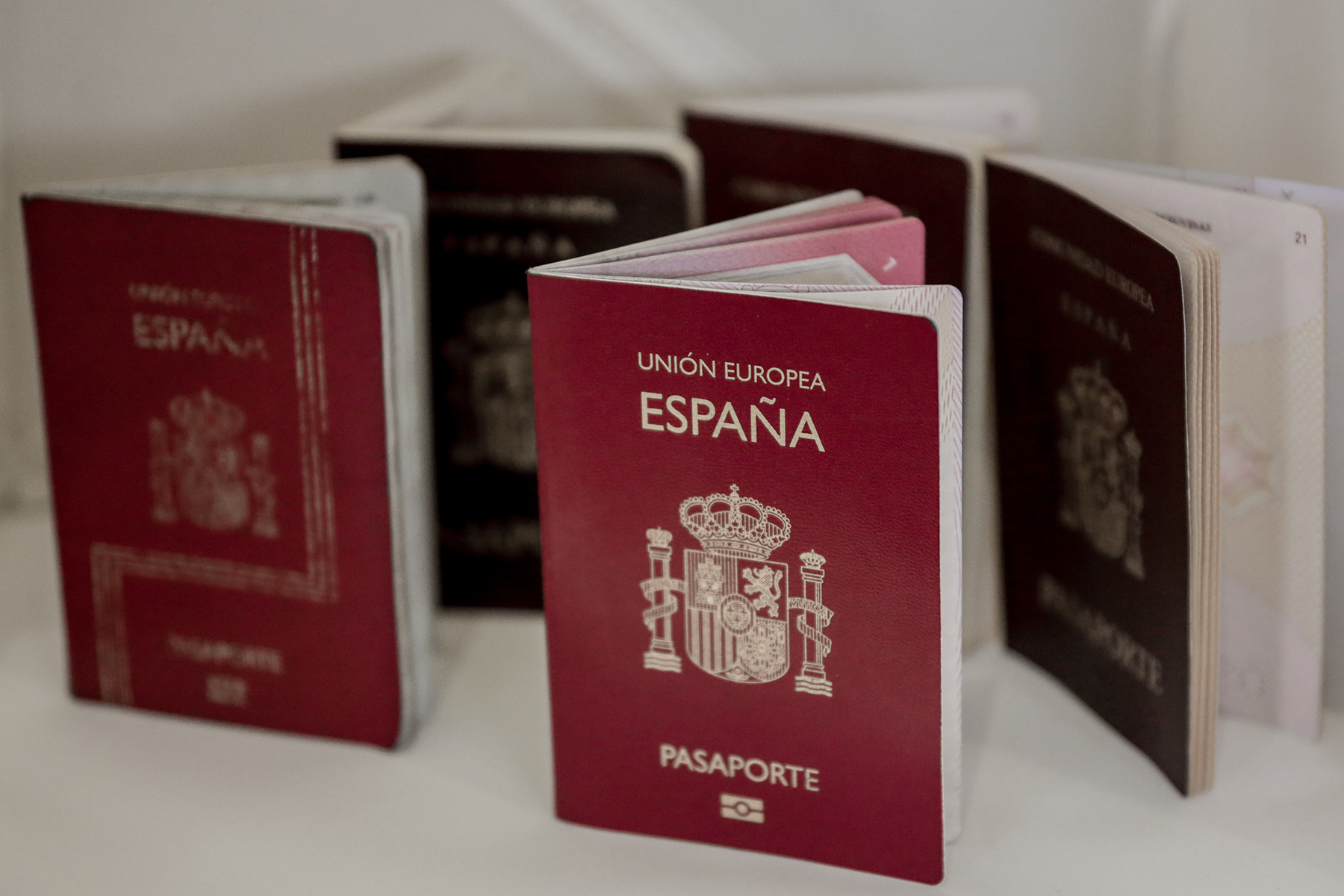
All applicants must prove that they are a good citizen. This means that you must be financially stable and have no criminal record. In addition, you must show a sufficient degree of integration into Spanish society. For example, you can speak Spanish and you take part in social activities that are part of the Spanish way of life.
You have to apply at the Civil Registry where you live in Spain. You will need to take along the required supporting documents for your Spanish citizenship application, plus a completed Spanish citizenship application form.
If you are 18 years or above, 14 or older with legal assistance, or the legal guardian of a person under 14, you can apply for Spanish citizenship. The process of applying for citizenship in Spain may be much easier with the help of expert immigration attorneys, who can assist you with every phase of the process of obtaining your residency permit.
Exemptions to the 10-year rules
As a rule, refugees only have to wait five years before they can apply for Spanish nationality. Nationals from Spanish-American countries, Andorra, the Philippines, Equatorial Guinea, Portugal, and those of Sephardic origin only have to wait two years.
The required period of residence for citizenship is just one year if you are born in Spain to legal foreign residents. The same period applies if you are married to a Spaniard, widowed from a Spaniard, or the child or grandchild. This applies even if you were born outside of Spain to a Spanish national (by birth or residence).
Descendents of expelled Sephardic Jews from Spain can also apply for Spanish citizenship without residing in Spain. This is if they can prove special connections to Spain and pass tests on Spanish language and history. The application deadline is 1 October 2019.
Origin or birth Spanish citizenship
You are Spanish by origin and can apply for Spanish citizenship by ‘Option’ (where you do not require a residency period) if you were:
- Born to a Spanish mother or father;
- Born in Spain to foreign parents, if at least one parent was also born in Spain. The exception is children of diplomats and consuls accredited in Spain;
- Were adopted by a Spaniard and are under 18, or are over 18 and were adopted within the last two years;
- Were born in Spain to foreign parents whose identity is unknown or their country of origin is undetermined (stateless or refugee status). This also applies if neither parents’ nationality could be legally passed on to you.
There are also other situations to qualify for Spanish citizenship, where residency is required for one year. This applies to those born outside Spain to parents (also born outside Spain) and grandparents, whom were originally Spanish. It also applies to those with a Spanish guardian or foster parent. Those who did not duly exercise their right to acquire Spanish nationality by option are also required to have a year.
Spanish citizenship by marriage
You can fast-track citizenship if you are married to a Spaniard and can become a Spanish citizen after living in Spain for one year. The application and conditions follow the standard citizenship procedure. The exception is that you don’t need to wait 10 years to apply. You will have to surrender your existing citizenship to become Spanish. You can also claim Spanish citizenship as the widower or widow of a Spaniard. However, you cannot have been separated at the time of their death.
Application fees for Spanish citizenship
Spain charges a non-refundable fee to process your citizenship application. The price varies and can range from €60-€100, even if they reject your application. Fees may also apply to issue certificates and documents required for your application.
Dual nationality
If you are successful, you will have to swear your loyalty to the King. You must also promise to obey the Spanish constitution and laws.
Unless you are from a Spanish-American country, Andorra, the Philippines, Equatorial Guinea, or Portugal, you will also have to renounce your previous nationality. Sephardic Jews and descendents can also maintain their original citizenship to have dual nationality.
You will lose your Spanish citizenship if you reside abroad and take up another nationality for more than three years. This also applies of you use your old nationality in that period. The only exception is, if within that period, you declare to the Civil Registry your will to keep Spanish nationality.
Useful resources
- Spanish Ministry of Foreign Affairs – the English version of the website for the Spanish Ministry of Foreign Affairs, supplying information on visas and migration to Spain
- Spanish Ministry of Employment and Social Security – the Spanish-language website for information on employment and social security policy in Spain.


