EXPATICA.COM - Happy living, abroad
Advertisement

survival_health

Healthcare in the Netherlands 20/08/2008 00:00

General medical care is high in the Netherlands but non-interventionist in nature. Here’s a current guide to health insurance, doctors, dentists and pharmacies.

X-rayThe Dutch healthcare system has undergone radical change in the last few years. It is now mandatory for everyone to have at least a base level of insurance (basisverzekering) but you are free to choose your own  health insurer (zorgvezekeraar) and change companies once a year. You must take out insurance with a Dutch insurer within four months of arrival even if you already have an existing policy that gives you cover in the Netherlands. Children under 18 are included in their parents' insurance.

A Dutch insurance company cannot refuse to cover for you for the basic package, regardless of your age or state of health. The standard basic package is pretty much the same from all providers except that costs may vary. If your income is under a fixed minimum level, you can apply for a healthcare allowance (zorgtoeslag) from the tax authorities (belastingdienst). Visit website www.toeslagen.nl (in Dutch) for more details. The income bands for 2007 were EUR 26, 071 for single people and a joint income of less than EUR 41,889 for couples.

The trade association of health insurance providers (www.zn.nl) includes some information in English and The Ministry of Health, Welfare and Sport (www.minvws.nl) has a downloadable leaflet on the health insurance obligation (in nine languages) as well as detailed information in English on many medical aspects. Another very useful medical portal is www.kiesbeter.nl (lit. choose better), which is in Dutch and at the website www.independer.nl  it is possible to get a comparison of insurance policies (in Dutch).

Basic insurance
The basic insurance covers general medical care (visits to the huisarts, for example), hospital stays, dental care for up to age 22, prescription medicine, and various appliances. Costs start at approximately EUR 100 a month.  The government keep tweaking this package.


You will need extra cover for extensive dental treatment, physiotherapy or anything else the government considers to be your own responsibility, and it is in these additional areas where companies compete. You can change the extras each year.  If you are self-employed, you may need to take out additional cover. Some insurance companies have policy documents in English. It is also worth checking with your colleagues and, if you work at a company, whether there is a collective scheme that provides a discount. Some employers cover (some) costs. If you are self-employed you may want to take out extra cover. Always check that the healthcare supplier (such as a physiotherapist) is registered with your particular insurer before starting treatment.

From 2008 there is a compulsory excess of EUR 150 on medical bills (verplicht eigen risico) for care not covered under the general health package. For additional treatment, you will pay via your insurer the first EUR 150 of bills. You can choose a higher ‘own risk’ amount in which case your monthly premiums will be lower. The no-claims bonus (a refund of EUR 255 if you made no claim throughout the year) is no more.  At www.kiesbeter.nl you can compare health insurance (zorgverzekeringen) and find the cheapest (goedkoopste) basispakket.


No smoking
Starting 1 July 2008, smoking will be banned in cafes, pubs, clubs, restaurants and hotels. Separate, enclosed, smoking zones are possible but food and drink cannot be served in them. The rule applies to tobacco smoking so doesn't apply to coffee shops (although the counter where you buy soft drugs must be a smoke-free zone).

Doctor
A huisarts is a family doctor and you need to register with one close to your home. The idea is that they are no more than ten minutes away in case of house calls. Some will turn you away because they are already full. Your insurance company can provide a list or check the local gemeentegids (a guide to everything in your area).  Sound out friends and colleagues for recommendations. You'll need a referral from a huisarts to receive non-urgent medical treatment from a hospital or other specialist health provider (like a physiotherapist). Many practices have a spreekhuur (or consultation hour) where you can consult your doctor. At weekends or during holidays you’ll hear a recorded message on their telephone telling you how to contact on-call medical services. For emergencies your huisarts can alert the hospital (for instance, if you've broken your ankle while skating, they call ahead to ensure they are ready to see you in X-rays). Don't expect a lot of medication. Dutch doctors are generally reluctant to hand out antibiotics for instance.

Dentist
A dentist (tandarts) can also be located via your insurance company and this is one area where you want to check your policy carefully. Dental care for those under 18 is covered in basic insurance. An annual check-up may be included in the basic insurance package (but not the hygienist fees, for instance). You can pay for additional cover.

GGD: Healthcare for children
The municipal health service (www.ggd.nl) (Gemeentelijke Gezondheidsdienst) covers all aspects of children's growth and development from 4 to19 years. On the website you can search for your local GGD, but if you have young children, they'll probably find you first via your registration with the GBA.  Inoculations and checks from birth to age 4 take place at the consultatieburo (there's a big check-up just before starting school). Publications are available in several languages.

Hospitals
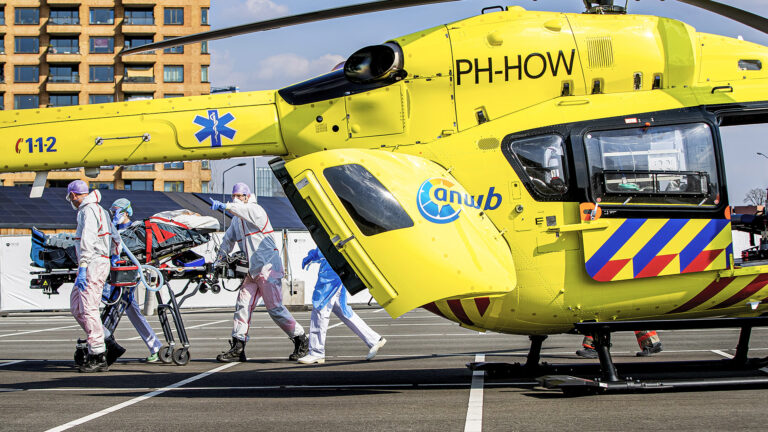
Accident and emergency is EHBO (Eerste Hulp bij Ongelukken) and the emergency services line is 112. For a hospital admission for non-emergency treatment, keep your insurance company informed and check your policy. Your insurers will require a referral letter from your huisarts. You make the appointment with the specialist at the hospital yourself.

Pharmacies
Once you have located a huisarts, you then need to locate a nearby pharmacy where you will pick up subscriptions. If this pharmacy deals with your particular insurance scheme, you won't have to pay bills directly.  Pharmacists are highly-trained and are able to give advice for minor complaints. Opening hours vary, but the address of the nearest out-of-hours pharmacy will be indicated on the door. Drogists supply over-the-counter remedies.

Having a baby in the Netherlands

“Ten to fifteen years ago, midwives were more against pain relief. But nowadays, this is an outdated image.”
Monique Schers, Royal Dutch Association of Midwives
.

Baby and midwifeThe Netherlands has a good record in prenatal care and safe childbirth and a third of babies are born at home. A midwife, an independent medical practitioner, will generally be your sole care provider during your pregnancy and delivery. Should you prefer a hospital birth, just let your midwife know. If you do deliver your baby in hospital you can often be back at home the same day for post-natal care.

Regular check-ups take place with the midwife. Prenatal testing and genetic screening are not routine for women under 36 or unless there is some medical history that puts her or the baby into a higher risk category. But if you need further tests, your midwife will refer you. There are many types of birth preparation classes, some of which are offered through a local home-care (thuiszorg) organisation, and they can supply a special pack for giving birth at home. Many costs will be covered by your insurance.

There's a wide choice of prenatal classes for you and your partner. Advice centre ACCESS runs a number of popular ones from the general workshop ‘Having a Baby in the Netherlands’ to childbirth preparation and breastfeeding classes. Pregnancy yoga is extremely popular, offering a variety of approaches, from gentle breathing and relaxation exercises to more energetic stretching. One of the best things about doing any class is meeting other parents-to-be and sharing experiences, information and concerns.

Finding a midwife
The majority of Dutch women are usually cared for by a midwife during pregnancy and childbirth. Gynaecologists are generally only part of the care process for women who have (or expect to have) complications. You can choose to have your baby at home (thuisbevalling) or at a hospital with a midwife (poliklinische bevalling). When locating a midwife (verloskundige), word of mouth is best but your huisarts might be able to make a recommendation. You can also visit the website of the Royal Dutch Association of Midwives (www.knov.nl). It's important to let your midwife know your feelings about pain relief from the beginning. Whether you get an epidural or not, for example, will depend on hospital logistics if your labour takes place during the day.

While some women complain that the Dutch childbirth system is becoming too medicalised, and others that it is not medicalised enough, everyone loves the post-natal care (kraamzorg). Once your baby has arrived, you will be given assistance at home by a maternity nurse (kraamverzorgster).She will monitor you and your baby's health, teach some general childcare and set up a daily routine. Best of all though, it may include household help. The amount of kraamzorg varies (from a few hours a day for five days to full-time care) and a representative will come round to discuss what is appropriate. The insurance generally covers the costs.

ACCESS: (www.access-nl.org). ACCESS publishes an excellent Babies and Toddlers book.
Midwives: (www.knov.nl)
Doulas: (www.doula.nl)
Thuiszorg: (thuiszorg.startpagina.nl/)
(www.parentinginholland.nl)


August 2008


Researched by Ann Maher


Expatica 


1 reaction to this article

Vaclav Zak posted: 01-03-2008 | 11:37 AM

Hi,
I would be glad if somebody could send me a link where I could find information about legal form of Dutch hospitals, especially large ones where doctors are educated.
Thanks Vaclav

Get Free tickets Here Book Your Stand Here
E-Specials

archive

word of the day : Goedendag

meaning : Good morning

phrase of the day : En u?

meaning : And you?

empowered by

internaxx

Index Last Var.(%)
BEL 20 3015.64 -1.65
DAX 6183.15 -1.54
IBEX 30 11208.6 -2.37
CAC 40 4234.46 -1.62
FTSE 100 5276.2 -1.60
AEX 390.74 -1.62
DJIA 11188.23 -2.99
Nasdaq 2259.04 -3.20
MIB 30 28367 -1.62
TSX Composite 12814.14 -2.46
ASX 4949.5 -2.01
Hang seng 19933.28 -2.24
Straits Times 2566.53 -2.27

also on expatica