topics
tools
editor's choice

Expatica readers offer tips for using social media for business

Why renting in Germany is more than just an apartment search

Learning German: Passing the critical stage

O’zapft is! German Festivals in 2011

Public holidays in Germany in 2011

Expatica countries
Index Last Var.(%)
BEL 20 2270.63 -0.42
DAX 6788.8 0.59
IBEX 30 8902.1 0.60
CAC 40 3424.71 0.43
FTSE 100 5895.47 0.33
AEX 325.12 -0.06
DJIA 12915.78 0.25
Nasdaq 2929.38 0.46
FTSE MIB 16653.83 -0.09
TSX Composite 12497.07 -0.19
ASX 4357.1 -0.15
Hang seng 21010.01 -0.04
Straits Times 2981.17 -0.03
ISEQ 20 503.71 0.33
You are here: Home Housing Buying Buying a home in Germany
Enlarge font Decrease font Text size


01/02/2012Buying a home in Germany

Buying a home in Germany Should you buy or rent? Owning your own home can be an attractive option with a long period of economic stagnation having helped to keep German real estate prices down.

Indeed, a pickup in the economy and people being encouraged to put more aside into pensions plans has made owning bricks and mortar a more interesting proposition for Germans, who for the most have been renters.

What is more, a somewhat fitful performance of the stock market has led many people to look at property as an alternative to shares.

The rents for newly built flats rose in commercial centers by 2 to 3 percent. This is a positive signal for real estate commerce in spite of general recession. This relates to a sturdy demand for apartments in areas with a high population density and the low activities in the construction sector. In other words, now is a good time to buy your condo.One key factor behind any decision to buy is the length of time you intend to stay in the country. Apart from the somewhat hefty costs involved in buying, property prices in Germany do not tend to race ahead like other real markets so you should not expect a big quick return on your investment.

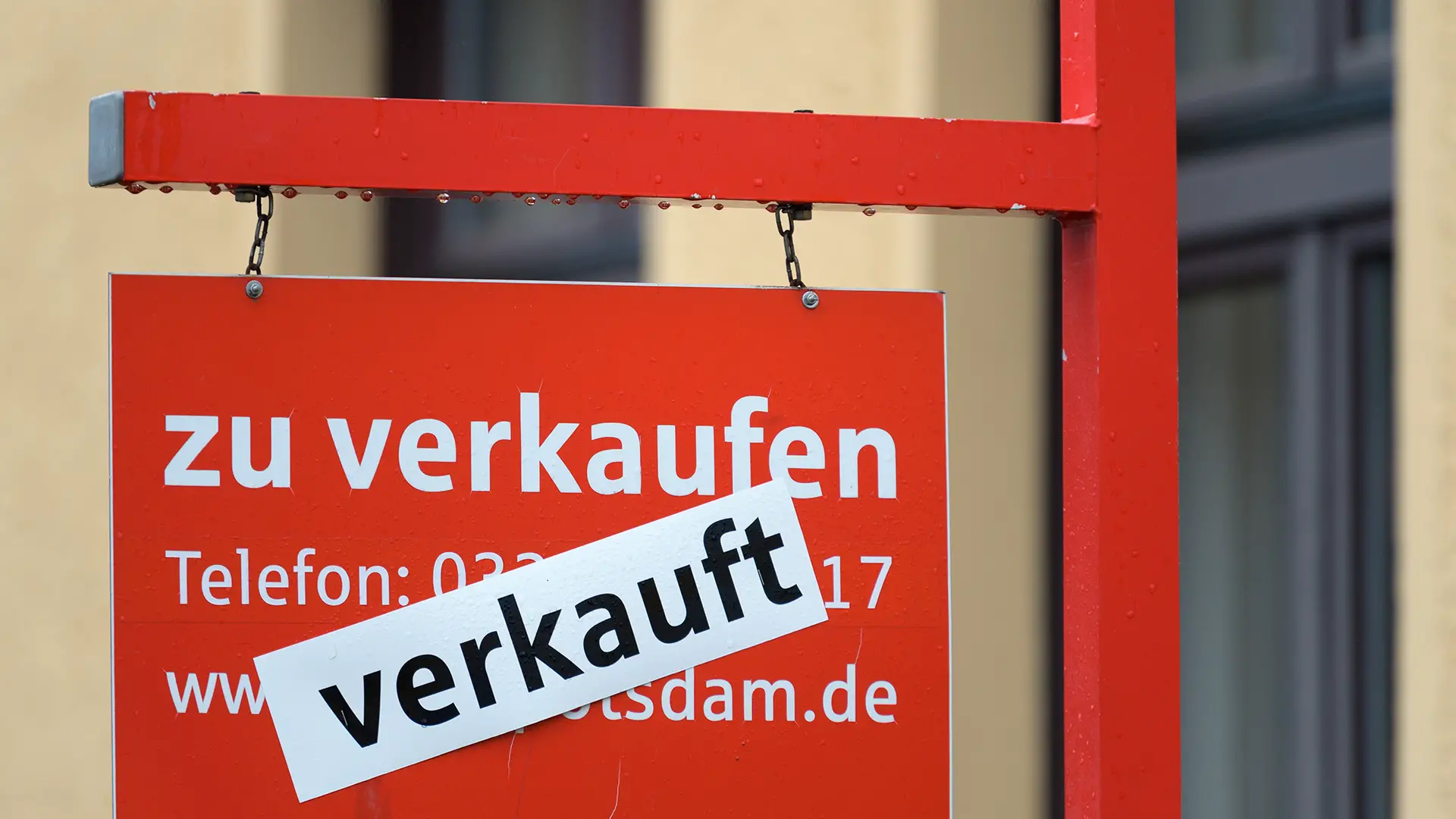
Buying a house in Germany: Photo By ceiling

The recent economic recession coupled with Germany’s less than sparkling economic performance over the years prior to recession has also meant that rents have barely moved in recent years (and in cities like Berlin are low in comparison with other European cities) you should also weigh up whether it is financially more sensible for you to rent or to make monthly mortgage payments.

You don’t have to be German or even be a resident to buy what the real estate business in Germany calls an Objekt. All you need is valid passport and enough money. At the outset you should realise that total fees, including say for the agents and preparing the contract, can add up to between 10 and 12 percent of the purchase price.

But as you head off out onto the market, don’t forget the main rule of investing in a property also applies in Germany: Do your homework to make sure that you will really receive a return on your investment. This “homework” is to understand your contract (rights and duties), become acquainted with the lot (what sort of shape it is in).

Considering the size of the investment, it is good to have as much understanding about the terms of contract as possible, and these will vary considerably per contract.  

Who you need to consult


Because a home-owning culture has not really developed in Germany, buying a property in the country can go along at a relatively leisurely pace without the tensions that arise in other markets around the world through auctions or in bidding wars.

But for really popular properties in Germany, you may find yourself competing in a quasi-auction with your agent (Makler) handling rival bids from prospective buyers.

Before you buy, it is advisable to assemble a small team of advisers: a lawyer, Notar (notary), a tax accountant . Bringing in an architect too is also advisable.

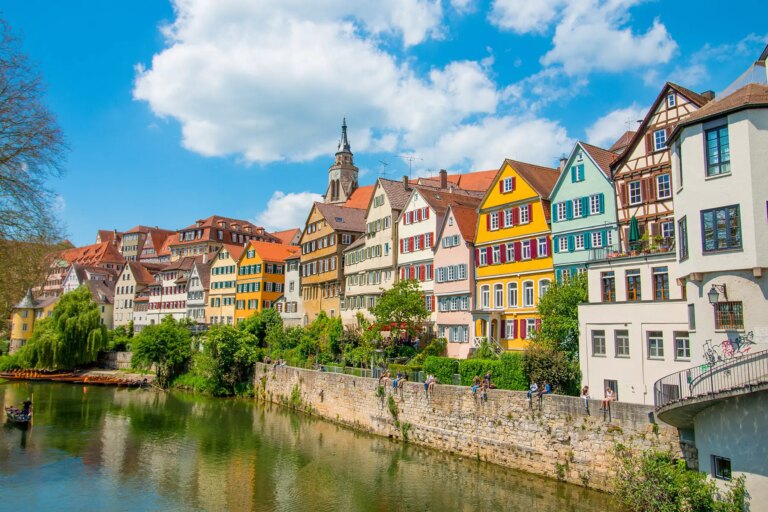
Housing in Germany: Photo By HamburgerJungOkay, so you have found your dream home. Remember that normally you don’t have to sign anything committing you to the purchase until you are presented with the final contract draft. Exceptionally, a realtor might prefer to have a contract / assignment signed.  In general, you just have to reach an agreement with the owner on the price. But after that events can move fairly quickly.

This is when the team of advisers comes to the fore with that quaint continental European tradition of the Notar playing a key role in the process. The public notary puts the contract into public form which is required for each and every real-estate transaction. When both contractual parties sign in front of the public notary and he/ she affirms this, the contract then becomes binding.

As the buyer, you may insist to select the Notar to legalize the contract. Especially when you buy from a development company, take their notary. This Notar’s services will significantly reduce the red tape for both contractual parties. Any fear of this being a disadvantage is without grounds. The Notar has a public office and is the only really ‘neutral’ person involved when buying a house in Germany.

 You will need your tax accountant or real estate lawyer to help you through the purchase, as the bank or mortgage company will want to see equity, and should the building have current tenants, for investments sake, you will need a list of the current owner’s open accounts and tenants’ creditworthiness. Depending on whether you want to live in it or rent it out as an investment you will need the tax accountant to fill you in on exactly what the tax advantages are at present. You could also look at the possible subsidies available to those modernizing a building for the reduction of energy consumption such as insulation and the installation of solar energy panels. You can collect outpayments of up to 96 percent of the investment value – either as a subsidized loan or a grant.

In the meantime, it wise to have an architect look over the property, especially if it is part of a building that has been renovated. There are all sorts of things to watch out for such as the age of the heating system, general condition of the staircase and any possible leakage in the roof.

If everything goes to plan, you will receive the contract to read through before you sit down to sign. Depending on the federal state of Germany, lawyers can be Notaries as well. The notary is not permitted to consult with you simultaneously in the real estate purchase and notarize the contract. Your notary can only either notarize or consult with you on the contract--in which case they will soley be your lawyer. It is strongly advisable to have an independent lawyer read through the document first. This lawyer will have the task of instructing the buyer on his/ her general rights and duties under German law. Test the contract for its legality, fairness, and when deficiencies exist, point out possible solutions. Either you or your lawyer can negotiate further options with the seller.

You should try and get as many of your wishes written into the contract as possible. This could include work on the property that the owner has agreed to undertake before you move in. Or even fittings that you want kept. This is especially the case if the property is part of a building which is being modernised. Valuable door handles, for example, have a habit of disappearing before you move in. Remember, what is not written in the contract has not been agreed upon.

In setting out your wish-list, don’t forget the so-called common areas such as the stairwell (carpet?) and entrance area (in need of an update?).

The parties will then assemble on a specified date in the Notar’s office for signing the contract and to partake in the seemingly ancient ritual of the Notar reading out the contract word for word before you are called upon to put your signature to it. If you don’t have a good grasp of the German language, make sure that you have an interpreter with you unless your lawyer or notary has an excellent command of the English language.  You will need to have your passport with you when the contract is signed for identification purposes.

If the property is part of a complex that is undergoing renovation you can make instalments as the building work progresses. Once again these will be set out in the contract. You can also draw up a so-called Mängelliste (list of faults) before you move in. This is when an architect on hand becomes very useful.

You should not pay the final payment until you are completely satisfied with the work and that all your wishes have been fulfilled.

The work carried out on modernised properties in Germany will normally have a five-year warranty. (Gewährleistung). But don’t be surprised if the building company responsible for carrying the costs of work under the guarantee suddenly declares itself to bankrupt once the project is completed.

Either way, battles over the ‘Gewährleistung’ will set you up for hours upon hours at the building’s annual ‘Eigentümerversammlung’ (owners’ meeting). If your German language skills aren’t up to it or you don’t have the time or interest to participate at these owners’ meetings, you may send a representative who could be your lawyer or simply somebody you trust.

Mortgages and financing

In general, mortgage financing usually can be arranged up to about 60 or 70 percent of the purchase price. This means that 40 to 30 percent must be presented as equity.

The day of reckoning: handing over the property

The contract will also set out the date for the Übergabe (handover) of the property. Because this is part of the contract, the failure of the owner or builder to meet the deadline for the Übergabe could mean that you can make certain claims. Übergabe is without doubt one of the important times in conveying property because then you practically own the lot. You are entitled to the rent and all the dues of the owner. The other instance is in the event of obtaining property—legal ownership.  You only own the property when you are registered as the owner in the land registry.

What it all costs

The cost of the whole process depends who is involved. But in general you can expect to pay:


  • Notar - about 1.5 percent of the purchase price - although these fees depend on the purchase price and are not subject to negotiation. 
  • Stamp Duty or Property Purchase Tax (Grunderwerbssteuer) - 3.5 percent of purchase price. This is only due once and by law both purchaser and seller are jointly liable for this tax. Contracts, however, typically determine that one person is responsible for this tax. N.B. the tax office is not bound by any such stipulation. However, any surcharges or fees for late payment and enforcement from the person contractually not liable for the purchase are to be reimbursed as damages.
  • Makler - between 3.5 percent and about 6 percent of the buying price. However, when it comes to brokering real estate for dwelling purposes, the broker may only take up to two monthly rents, and can be fined should more be taken.
  • Land Title Registry – around 1 percent. The fees depend on the property’s value.
  • Any mortgage needs to be made binding via the ‘Grundbuch’ (land registry) and that can only be done by a Notar.

As a result, you find you stand to be hit with a bill from an office or notary every time a piece of paper concerning the property moves in the local administration. Typically these are petty costs.


Andrew McCathie

Updated in January 2012 by Alexander Baron von Engelhardt expat’s lawyer and Legal Journalist.

Photo credits: ceiling; HamburgerJung; dierk schaefer


2 reactions to this article

gabriele riedel posted: 2010-03-24 14:31:01

This was an informative article. I would like to see more recent info re: USA investors purchasing prop for business to hire Germans and tax benefits. I am a German citizen and have American person who would like to partner with me in business in the next year or so. Thanks!<br />

Editor DE posted: 2010-03-26 09:03:20

Hallo gabriele riedel,

We are currently having this article updated and hope to have the new version posted within two weeks.

In the meantime, you can go to our Ask-the-expert section and post your question to our Housing expert:
http://www.expatica.com/de/ask_expert.html

Best,
EditorDE

2 reactions to this article

gabriele riedel posted: 2010-03-24 14:31:01

This was an informative article. I would like to see more recent info re: USA investors purchasing prop for business to hire Germans and tax benefits. I am a German citizen and have American person who would like to partner with me in business in the next year or so. Thanks!<br />

Editor DE posted: 2010-03-26 09:03:20

Hallo gabriele riedel,

We are currently having this article updated and hope to have the new version posted within two weeks.

In the meantime, you can go to our Ask-the-expert section and post your question to our Housing expert:
http://www.expatica.com/de/ask_expert.html

Best,
EditorDE

Inside Expatica
The ABCs of the German school system

The ABCs of the German school system

What you need to know about German schools and daycare.

German immigration and residency regulations

German immigration and residency regulations

Want to move to Germany but haven’t figured out the details? Check out Expatica’s overview of the German permit system.

Driving in Berlin: Rules, habits and fines

Driving in Berlin: Rules, habits and fines

In part one of our two part series, we cover the driving culture in Berlin, where to park and buy gas and, most importantly, the laws.

Looking for work in Germany: The in depth version

Looking for work in Germany: The in depth version

Our comprehensive guide includes information on how to find work, recruitment agencies, employment contracts and labour law.