Browse Topics
Tools
Internaxx Stock Market
Index Last Var.(%)
BEL 20 2119.3 0.50
DAX 5252.45 1.50
IBEX 30 10726.8 0.59
CAC 40 3377.59 1.40
FTSE 100 4564.5 0.79
AEX 276.85 0.95
DJIA 9096.72 -0.13
Nasdaq 1975.51 0.39
FTSE MIB 20341.67 1.65
TSX Composite 10570.54 -1.74
ASX 4148.9 -0.60
Hang seng 20135.5 -2.37
Straits Times 0.00
ISEQ 20 442.48 0.27
You are here: Home News European News Swiss to join Europe's passport-free zone

01/12/2008Swiss to join Europe's passport-free zone

Passengers on flights between Swiss airports and Schengen-zone destinations, however, will continue to have to show their passports until March.

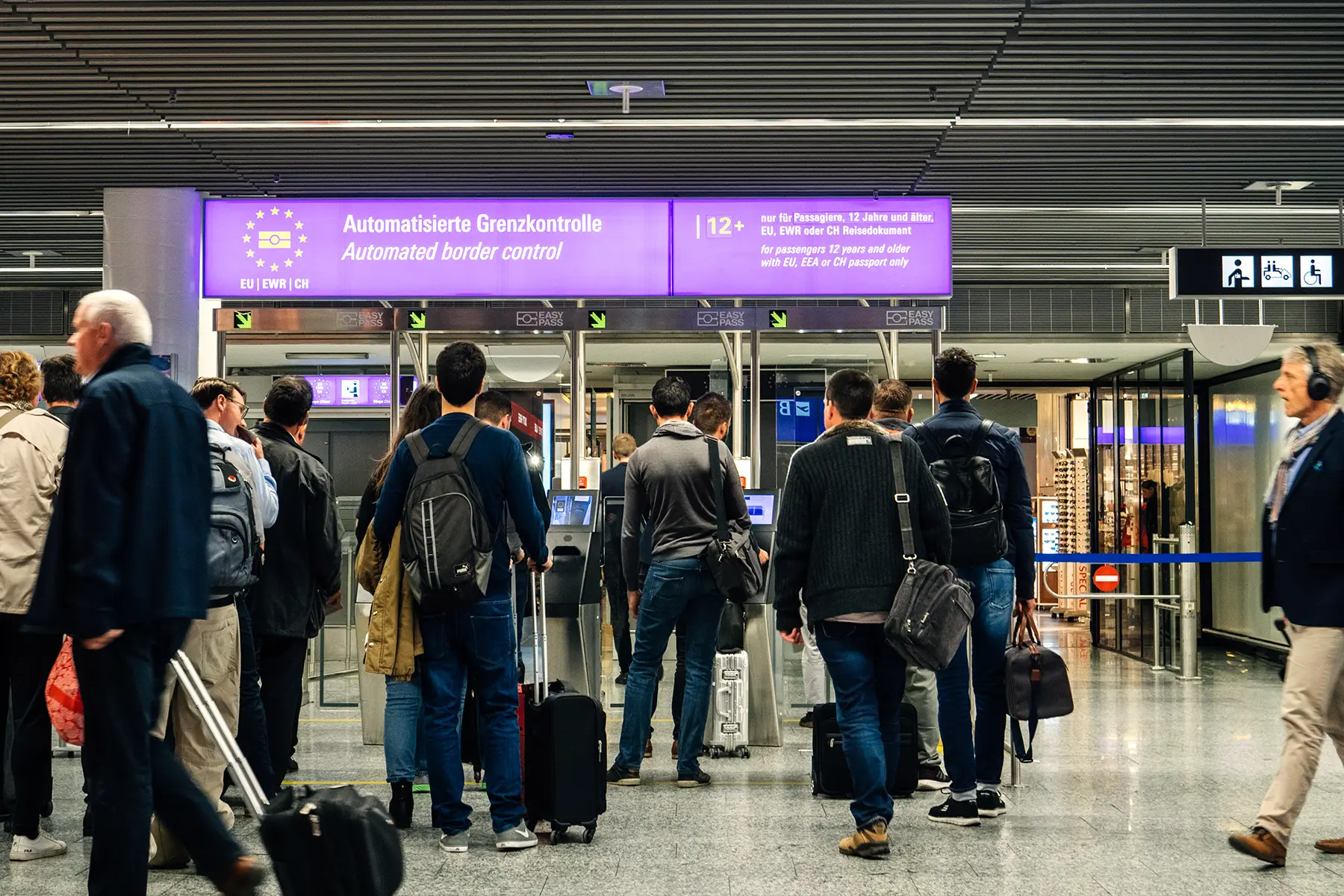
Brussels -- Switzerland is to join the European Union's free-movement Schengen area as of Dec. 12, the bloc's interior ministers agreed last week.

Systematic land border controls for people traveling between Switzerland and neighboring EU countries will be terminated on that date, allowing Swiss and EU citizens to visit one another's countries without having to show their passports.

Passengers on flights between Swiss airports and Schengen-zone destinations, however, will continue to have to show their passports until March 29 -- the date on which European airlines are set to switch from winter to summer timetables.

This is because aircraft landing in and taking off from European airports take their passengers on board from different terminals, depending on whether the flight links two Schengen cities or crosses the Schengen zone's border.

EU airports would therefore have to re-draw their entire flight schedules to accommodate Switzerland's change from non-Schengen to Schengen status, while Swiss airports would have to change their flight schedules to set up new Schengen and non-Schengen terminals.

The decision to wait until the March timetable change allows airports to incorporate the shift in Schengen states into the larger exercise of re-allocating runway space for the summer season.

The Schengen passport-free zone was originally created by France, Germany, Belgium, the Netherlands and Luxembourg in 1985 near the Luxembourg town of Schengen, and put into practice in 1990.

It was expanded to cover the larger EU in 1995, although Britain and Ireland -- the EU's two main island member states - decided not to join the system, preserving their own border systems.

Non-EU members Norway and Iceland also joined the zone in 2001, as they were already part of a passport-free zone with EU members Denmark and Sweden.

The latest expansion came at the end of 2007, with the introduction of nine new EU member states, mostly in Central and Eastern Europe: Estonia, Latvia, Malta, Lithuania, Poland, Hungary, Slovakia, the Czech Republic and Slovenia.

The decision to bring Switzerland into the zone was taken at a meeting of EU justice and interior ministers in Brussels.

DPA/Expatica

0 reactions to this article

Discussion Forums

Religion & spirituality

Music to lift you up, by lissa0915

Religion & spirituality

Love, Quotes, by lissa0915

Religion & spirituality

On the lighter side..., by lissa0915

Films, Shows & Events

IMPACT: The Third Man in Munich Nov 29th 2009 at 8pm LEO 17, by blairgaulton

Humour

Joke of the day, by mikeyt

participate in the forums

Inside Expatica
The ABCs of the German school system

The ABCs of the German school system

Trying to size up the education system is one of the hardest things facing those embarking on a foreign posting. We set out what you should know about German schools and daycare.

How to move to Germany legally: visas and citizenship

How to move to Germany legally: visas and citizenship

Want to move to Germany but haven’t figured out the details? Check out Expatica’s overview of the German visa and citizenship system.

Taking your pet on assignment

Taking your pet on assignment

When moving abroad, the owner must make an informed decision as to whether their pet is up to the trip. Here’s an overview of the factors involved.

Looking for work in Germany: The in depth version

Looking for work in Germany: The in depth version

Moving to Germany but still searching for a job? Check out Expatica’s comprehensive overview of the ins and outs of employment in Germany, including information on how to find work, recruitment agencies, employment contracts and labour law.